Contract Review
Contract review playbooks, clause-level checkpoints, and practical review workflows.
Featured
A curated selection of articles to read first from LegalAgent AI Legal Lab.

Cross-border e-commerce terms: consumer sales, governing law and jurisdiction
Review governing law and jurisdiction for overseas consumer sales, align Japanese and English terms, and address returns, shipping and personal information.
Read article
Governing Law and Arbitration in International Contracts: Resolving the Last Two Clauses
How to negotiate governing law and dispute resolution by considering asset location, enforcement, the arbitral institution, seat, language and number of arbitrators.
Read article
Reading English-Language Contracts: Structure, Modal Verbs and Liability Clauses
How to connect defined terms, obligations, indemnities and liability caps, and read shall, may and will in context.
Read article
Reading an English NDA: Essential Clauses Compared with Japanese Agreements
A practical guide to English NDAs, covering confidential information, permitted use and recipients, survival periods, residuals, injunctions, and translation pitfalls.
Read articleContract Review articles
Contract review playbooks, clause-level checkpoints, and practical review workflows.
Cross-border e-commerce terms: consumer sales, governing law and jurisdiction
Review governing law and jurisdiction for overseas consumer sales, align Japanese and English terms, and address returns, shipping and personal information.
Read articleGoverning Law and Arbitration in International Contracts: Resolving the Last Two Clauses
How to negotiate governing law and dispute resolution by considering asset location, enforcement, the arbitral institution, seat, language and number of arbitrators.
Read articleReading English-Language Contracts: Structure, Modal Verbs and Liability Clauses
How to connect defined terms, obligations, indemnities and liability caps, and read shall, may and will in context.
Read articleReading an English NDA: Essential Clauses Compared with Japanese Agreements
A practical guide to English NDAs, covering confidential information, permitted use and recipients, survival periods, residuals, injunctions, and translation pitfalls.
Read article
Japan's Logistics Efficiency Act and Freight Contracts: Shipper Duties and Contract Reviews
Shipper duties, designation thresholds and freight contract documentation after the April 2026 amendments, including retention periods, ancillary services, rate schedules and daily shipment orders.
Read article
Advertising Agency Agreements: Accounts, Data and Costs
A practical guide to media spend and fees, account access, campaign data, creative rights and advertising compliance, including the handover terms needed when changing agencies.
Read article
VTuber and Creator Agency Contract Practice: Outsourcing Structure and Freelance Act Compliance
A practical guide to outsourcing agreements between VTuber or creator agencies and talent, covering Freelance Act obligations, character and channel ownership, graduation terms, revenue sharing and exclusivity clauses.
Read article
Japanese Premiums and Representations Act Checks for Game Gacha: Complete Gacha and Probability Disclosures
A practical review of paid gacha items, additional rewards, prohibited complete gacha, probability disclosures and guaranteed-reward settings under Japanese law and CESA guidelines.
Read article
Worker Dispatch and Disguised Contracting: When the Worker Dispatch Act Applies Even Though the Contract Says "Outsourcing"
Calling a contract a service agreement does not keep the Worker Dispatch Act away. This article explains the Notice No. 37 criteria, the deemed offer of employment risk under Article 40-6, and the on-site practices clients and contractors should check.
Read article
Recruitment Agency Agreement Checkpoints: Placement Fees, Refunds and Direct-Hire Clauses
When a hire made through an agency leaves after a few months, the refund clause decides what comes back. This article covers agency licensing, capped and notified fees, tiered refund conditions, direct-hire clauses, candidate data and the ban on cash incentives.
Read article
Reviewing an Office Lease: Termination, Restoration and Deposit Deductions to Check Before Relocating
Office leases between business operators fall outside the Consumer Contract Act, so unfavorable clauses tend to apply as written. This article covers ordinary and fixed-term leases, early termination notice periods and penalties, skeleton restoration, deposit deductions, free rent repayment and subletting restrictions.
Read article
Construction Subcontracts and the Construction Business Act: Written Contracts, the Ban on Bulk Subcontracting and Payment Deadlines
Construction subcontracts are governed by the Construction Business Act rather than the Torihiki Tekiseika Act. This article covers the written contract items under Article 19, the ban on bulk subcontracting and its exceptions, and the rules on payment deadlines, inspection periods and below-cost pricing.
Read article
LBO Loan Term Sheets: Covenants and Events of Default That Shape Post-Acquisition Management
This article covers the terms a borrower negotiates in an LBO loan term sheet, focusing on mandatory prepayment, covenants and events of default. It also addresses exclusivity in the arrangement, fees, representations and warranties about the target company, and how to respond in business succession deals.
Read article
LBO Loan Security and Guarantees: The Timing of Providing the Target Company's Assets and Directors' Liability
For transactions in which the target company provides security and guarantees for the buyer's borrowing under an LBO loan, this article covers the directors' duty of care, when the security and guarantees can be provided, the approval of conflict-of-interest transactions and board resolutions, and the treatment of assets that are difficult to give as security.
Read article
VC and CVC Fund Formation: Key Clauses of the Investment Limited Partnership Agreement and the Specially Permitted Business Notification
This article covers the investment limited partnership used to form VC and CVC funds: how it differs from an LLP or a Civil Code partnership, the clauses on compensation, key persons and removal of the GP negotiated in the partnership agreement, the requirements for the specially permitted business notification, and what an operating company investing as an LP should check.
Read article
Internal Use and Copyright: What to Check When Sharing Articles, Preparing Training Materials, and Using AI Summaries
Copyright also matters for sharing articles internally and preparing training materials. This article explains what to check regarding private use, quotation and source attribution, public transmission, input into generative AI, and reproduction license agreements.
Read article
How to Draft a Data Provision Agreement: Scope of Use, AI Training, and Treatment on Termination
This article explains the scope of use, AI training, processed outputs, subcontracting, quality warranties and deletion on termination to be set out in a data provision agreement. It also covers points to check regarding trade secrets, shared data with limited access and the Act on the Protection of Personal Information.
Read article
Managing Trade Secrets: "Confidential" Markings and Access Rights in Practice
An explanation of the three requirements for trade secrets and secrecy management in line with the Ministry of Economy, Trade and Industry's guidelines. This column considers the relationship among confidentiality markings, access rights, and NDAs, and information management in the cloud and upon employee departures.
Read article
Export Control Basics: What to Check Before Providing Technology Abroad and Deemed Exports
Before sharing technology in overseas development outsourcing or joint research, this column explains the steps for checking classification, end use and end users, deemed exports and license exceptions.
Read article
Cosmetics and Health Food Advertising Under the PMD Act: Efficacy Claims, Testimonials, and Administrative Surcharges
An explanation of the 56 efficacy claims for cosmetics, how they differ from quasi-drugs, and function claims for health foods. We distinguish the application of Articles 66 and 68 of the PMD Act and look at reviewing advertisements, including testimonials and photographs, and responding to administrative surcharges.
Read article
E-Commerce Sites and the Act on Specified Commercial Transactions: Advertising Disclosures, the Final Confirmation Screen and Special Return Terms in Practice
This article explains advertising disclosures, the final confirmation screen and special return terms for e-commerce sites under the Act on Specified Commercial Transactions. It also covers displaying subscription terms, distinguishing returns for the customer's own reasons from defective goods, and checking order screens before launch.
Read article
Using AI for Contract Review and Article 72 of the Attorney Act: What Legal Teams Can Leave to AI
How to deal with the unauthorized-practice rule in Article 72 of the Attorney Act when using AI for contract review is a challenge for corporate legal work. Based on the Ministry of Justice guidelines, this article shows the boundary between routine work that can be left to AI and matters with case-ness that require consulting an attorney, along with practical steps for companies to adopt AI safely.
Read article
External Transmission Rules and Cookie Compliance: Covered Services, Matters to Publish, and When Consent Is Required
This article explains the scope of services covered by the external transmission rules, the matters to be notified or published, and the conditions for consent and opt-out. It also covers the difference between selling on your own site and running an online mall, the rules on personal-related information, and the work of matching tags with what is displayed.
Read article
The Amended Act on the Protection of Personal Information: Where Things Stand After Promulgation and What Companies Should Prepare
The amended Act on the Protection of Personal Information (Act No. 56), promulgated on July 17, 2026, does not yet have an effective date. In light of the administrative surcharge system and the rules on biometric information, here is where things stand after promulgation and the key points of internal reviews that can be started in advance.
Read article
Complying with the Torihiki Tekiseika Act: Internal Practices Ordering Companies Should Review After It Took Effect
In January 2026, the Subcontract Act was revised into the Torihiki Tekiseika Act. Items for ordering companies to review in their internal practices in light of the added employee-count test, the prohibition on payment by promissory notes and the like, and the prohibition on unilaterally setting prices without responding to consultation.
Read article
Complying with Stealth Marketing Regulation: A Legal Review System for Influencer Campaigns
On October 1, 2023, "Representations That Make It Difficult for General Consumers to Recognize Them as Representations by a Business Operator" took effect as a designated public notice under the Premiums and Representations Act. This is the so-called stealth marketing regulation, and engaging influencers or ambassadors to introduce products or services...
Read article
Abuse of a Superior Bargaining Position: An Antimonopoly Act Framework SMEs Can Use in Dealings With Large Companies
When presented with unfavorable terms in a transaction or business alliance with a large company, not a few business owners give up, thinking, "The other side is a large company, so we have no choice but to accept these terms." However, conduct in which a party with a superior position in the transaction uses that position to impose unjust disadvantages may, under the Antimonopoly Act...
Read article
A Legal Agent engineer has published a case study on Zenn about the custom MCP server that supports our legal AI (Japanese)
Our firm's engineer has published "Field Report: A Law Firm Today" on Zenn. The article introduces development tailored to legal practice, including connecting AI agents with Office through a custom MCP server, techniques for handling Word tracked changes with minimal diffs, and searching matter documents.
Open external link
Poaching of Customers and Employees by Departing Employees: Key Points on the Company's Claims and Evidence
The mere fact that customers or colleagues moved after an employee left does not mean the company's claims will be upheld. We examine non-competition agreements, trade secret management and the method of solicitation, and consider the basis for warnings, injunctions and damages.
Read article
How a Company Should Respond to a Labor Tribunal Petition: Preparing the Written Answer and the First Hearing
When a labor tribunal summons arrives, work backward from the deadline for the written answer and the first hearing. This article covers everything from checking the petitioner's claims against the evidence to deciding on a proposed settlement and objecting to a tribunal decision.
Read article
Responding to Labour Standards Inspection Office Investigations: Inspections, Correction Recommendations and Reports in Practice
In a Labour Standards Inspection Office investigation, the question is whether the books match how people actually work. Based on the inspection authority and the difference between correction recommendations and guidance notices, this article considers how to describe the improvements made in the report.
Read article
Non-Renewal of Fixed-Term Contract Employees: Renewal Counts and Conversion to Indefinite-Term Employment in Practice
Even if you set a renewal cap and give notice 30 days in advance, non-renewal is not necessarily valid as a matter of course. Separate the reasonable expectation of renewal from the right to apply for conversion to indefinite-term employment, and consider whether the contract can be ended in light of its history.
Read article
Types of Disciplinary Action and How to Choose: Criteria for Pay Reduction, Suspension and Disciplinary Dismissal
The mere fact that misconduct occurred does not mean any disciplinary action can be chosen. Weigh the basis in the work rules against the severity of the action, and check the cap on pay reductions, dismissal notice and retirement allowance one by one.
Read article
Leave of Absence and Return to Work for Mental Health Conditions: Aggregation Rules and Points to Note in Return-to-Work Decisions
When an employee goes back on leave shortly after returning to work, how the leave period is counted depends on the rules and agreements in place. This article considers matching medical certificates against assigned duties, wages during trial attendance, and termination of the contract when the leave period expires.
Read article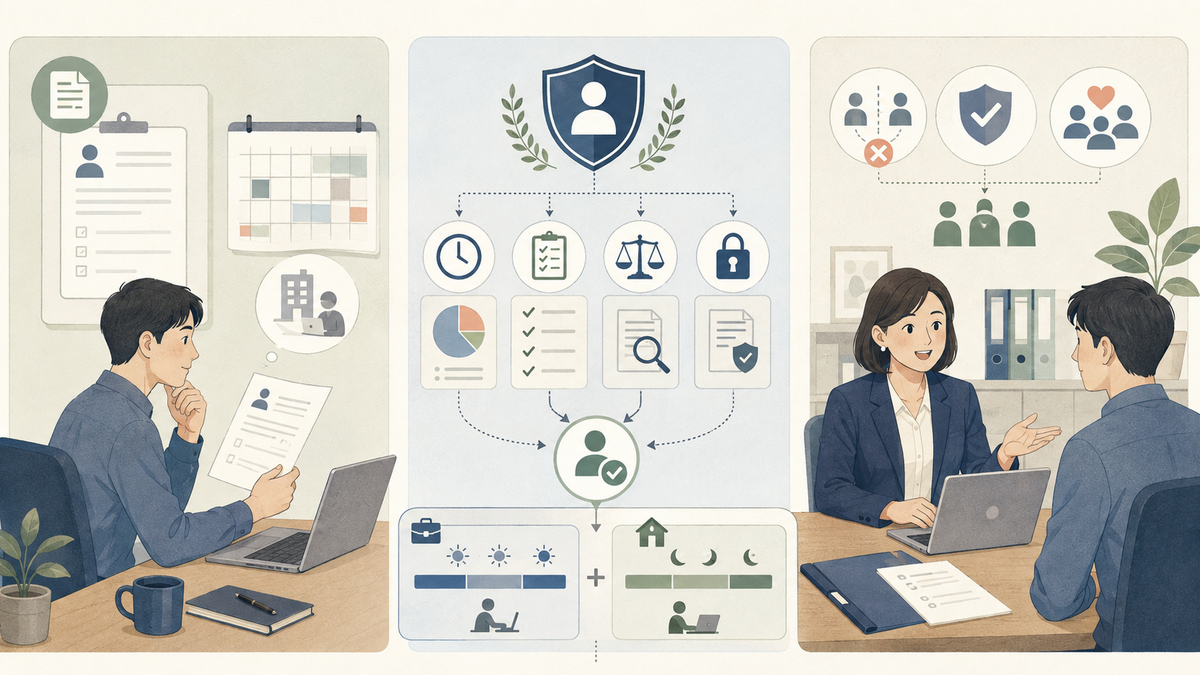
Work Rules That Permit Side Jobs: Designing an Approval System and Aggregating Working Hours
A company that receives notice of a side job should specifically confirm its reasons for any restriction and the scope of that restriction. Alongside aggregation of working hours across multiple employers, allocation of overtime premiums and the conditions for introducing the management model, this article considers protection of confidential information and health management from both the work rules and operational perspectives.
Read article
Legal Issues in Vertical Short Dramas: Performer Agreements, Secondary Use and Overseas Distribution
For vertical short dramas, you need to confirm the licenses not only for distributing the main episodes but also for clips used in social media ads, AI dubbing and overseas expansion. Taking into account the rights in the original work, music and performers and the rules on production outsourcing, decide the scope of use and consideration before shooting.
Read article
Legal Issues for Autonomous Taxis: Drawing the Lines Between the Operator, Accident Liability and Remote Monitoring
Even for a taxi without a driver, the license under the Road Transportation Act and responsibility for operational management remain. The more companies are involved in vehicle supply, remote monitoring and dispatching, the more essential it is to arrange in advance the allocation of liability in accidents and the handling of data.
Read article
Preparing the Data Room for Legal Due Diligence: Version Control and Organizing Documents So AI Can Read Them
Even when using AI in legal DD, you need to match executed versions with amendment memorandums and check extraction results against the source materials. This article explains how to prepare a document management spreadsheet and the handling of personal and confidential information to check before disclosing to external AI.
Read article
English-Language Contracts for Overseas Expansion: Choosing the Governing Law and Seat of Arbitration, and Provisions Your Team Can Operate
In overseas transactions, dispute resolution provisions are examined in light of where the counterparty's assets are located. We explain the scope of application of the CISG and trade terms, local regulations on matters such as sales territories, and how to manage notice and renewal deadlines internally.
Read article
Are Oripa Illegal? Legal Regulation of Online Original Card Packs: Gambling, the Premiums and Representations Act and the Payment Services Act
The legal assessment of online oripa depends not only on the value of the cards but also on how the lottery, buyback and point-exchange mechanisms work. In addition to the crimes of gambling and lotteries, the Premiums and Representations Act, the Payment Services Act and contracts with minors also need to be examined against the actual design.
Read article
Carbon Credits and GX Initiatives: Regulation of Environmental Claims and Points to Check in Purchase Agreements
Purchasing credits, reducing emissions, and canceling credits are different procedures. This column explains how to clarify the scope and basis of environmental claims, and how to provide in the contract for transfer on the registry, prevention of double use, and delivery of certificates.
Read article
Construction Business Licenses and On-Site Responsibility in Construction Management SaaS and Tradesperson Matching
In construction management SaaS and tradesperson matching, confirm who undertakes the construction work and who gives instructions to workers. This article explains the license exception for minor work, the prohibition on wholesale subcontracting, the assignment of engineers, and the conditions for using construction data.
Read article
Real Estate Tech and the Real Estate Brokerage Act: The Line Between Listing and Brokerage, IT-Based Explanations of Important Matters and AI Valuation Displays
Whether a real estate tech business needs a license or registration is determined by its actual business, not by the names used on screen. This article reviews the line between listing and brokerage, the procedures for IT-based explanations of important matters, AI valuation displays and the scope of registration for rental management.
Read article
AI Meeting Minutes Tools and Confidentiality Obligations: Gaps That Arise When Recording and Inputting NDA-Covered Meetings
Recording an NDA-covered meeting with an AI minutes tool may send the audio to an external service. Separate notice of recording from third-party disclosure, check the terms of use and the handling of personal information, and set internal operating rules.
Read article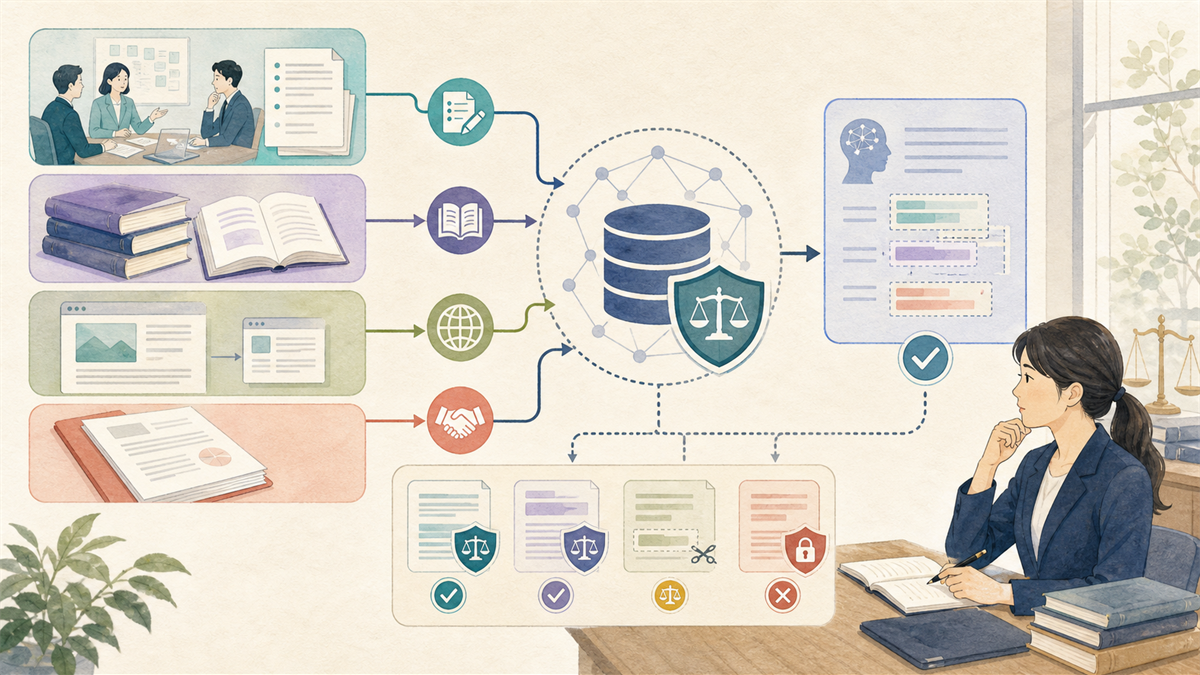
Searching Internal Documents with RAG: How Copyright Risk Changes with the Type of Material
What needs to be checked before feeding materials into RAG differs between your own meeting minutes and practical guides you purchased. Based on the requirements of Articles 30-4 and 47-5 of the Copyright Act, we consider the scope of permissible use in light of where the materials come from and how output is produced.
Read article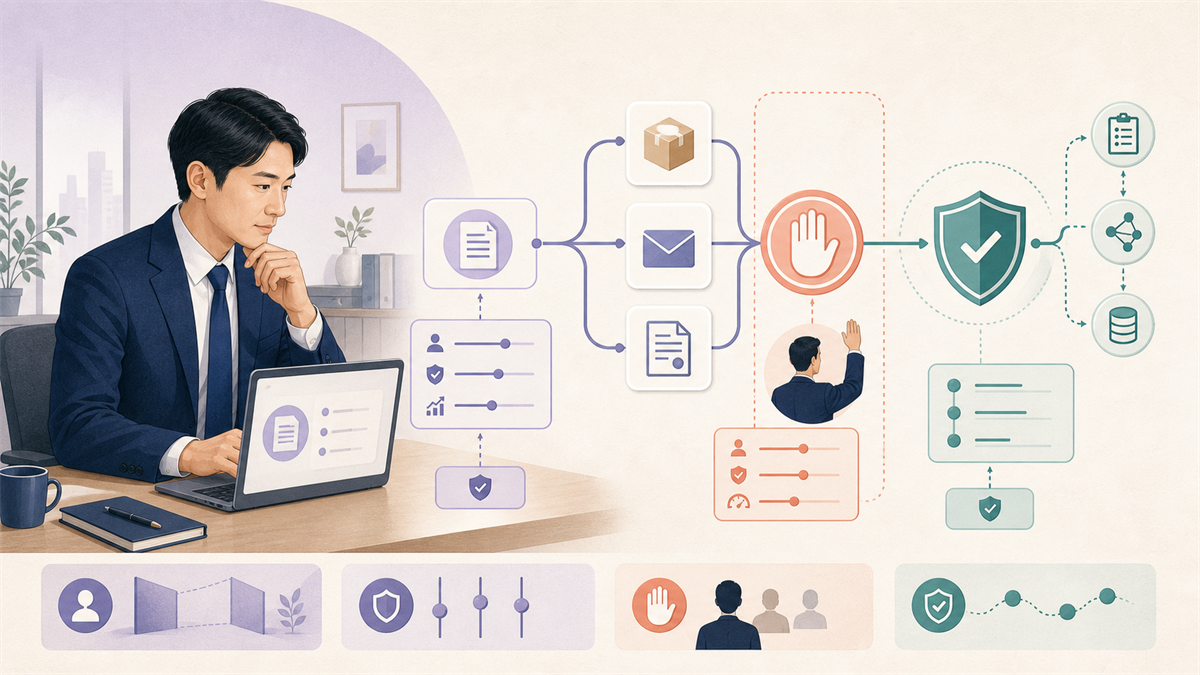
Designing AI Agent Authority: What to Decide Before Entrusting Orders and Messages to AI
To prevent erroneous orders by AI agents, you need to decide where human approval will be inserted. Centering on the design of monetary thresholds and execution records, this article considers the validity of contracts in the event of a malfunction and arrangements with business partners.
Read article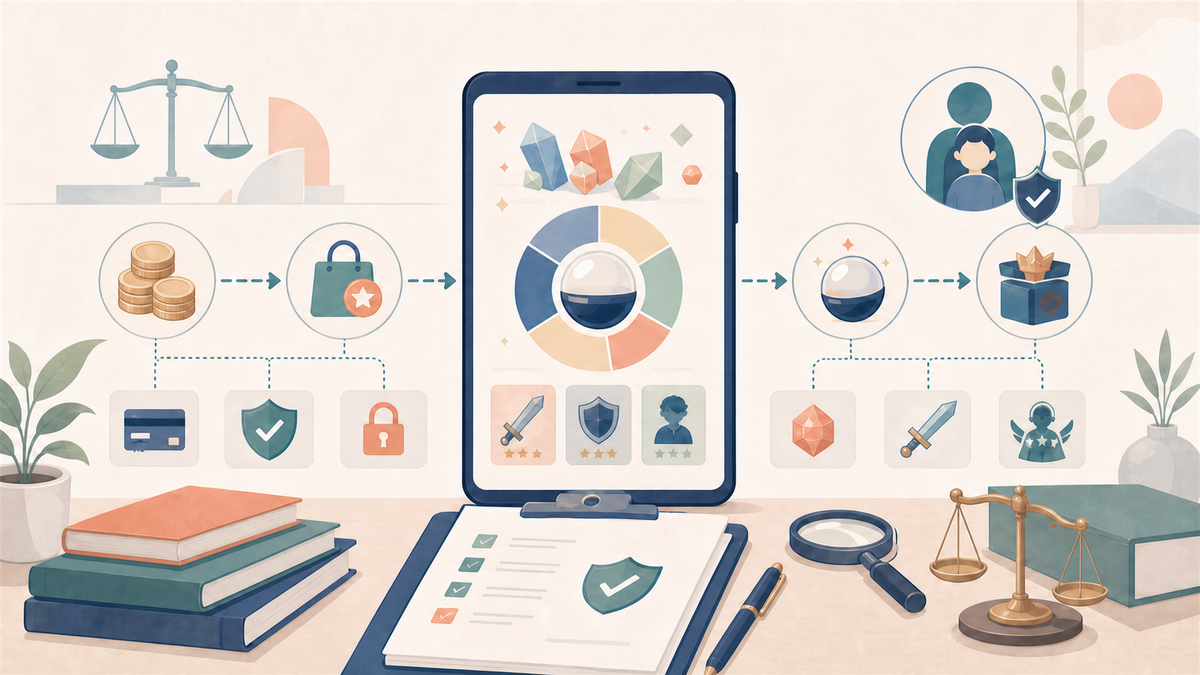
In-Game Purchases and Gacha Campaigns: Prepaid Payment Instruments and Probability Disclosures
Whether paid coins require notification or registration depends on the issuer, where they can be used and their expiry. This article checks management of unused balances, gacha disclosures against the actual draw settings, the ban on complete gacha and the conditions for purchases by minors.
Read article
Employee Invention Rules and OSS Management: How the Requirements of Article 35 of the Patent Act and Article 15 of the Copyright Act Differ
The requirements for rights to vest in the company differ between Article 35 of the Patent Act and Article 15 of the Copyright Act. We connect the invention disclosure and reasonable benefits process, acquisition of rights from contractors, and operation of an OSS register to records that can be explained in legal due diligence.
Read article
Comparing Legal Outsourcing: How It Differs from Outside Counsel and What LegalAgent Provides
The names retainer and legal outsourcing alone do not tell you what support is provided. This article explains how to compare the work that remains in-house and the costs, from intake of requests and contract revisions to internal explanations and handover of matters.
Read articleSummarizing Two Drafts of a Contract or Internal Rule in a Comparison Table: Checking Differences With Generative AI
In a contract comparison table, the evaluation differs depending on whose liabilities or rights change. Using an example and instructions from the client's position, this article introduces a procedure for checking generative AI's comparison results against the original text and tracked changes.
Read articleGetting a Rough Translation of English Contracts and Emails: How to Use Generative AI
After grasping the outline of an English contract through a rough translation, check in the original text whether obligations exist and how far they extend. Using indemnification clauses and the translation of shall and may as examples, this article shows how to use summaries and side-by-side translations for different purposes.
Read articleDrafting an Internal Risk Explanation Memo: How to Use Generative AI
Even when the legal team finds a risk, decision-makers may be unable to choose a response from the quoted clause alone. Have generative AI draft a memo that conveys the business impact and the options, then finalize it against the contract as a whole.
Read articleExtracting Deadlines, Amounts and Obligations from Contracts into a List: A Handy Use of Generative AI
Even if a list made from a contract says "Not stated," that does not necessarily mean the clause truly does not exist. Attach the supporting provisions to generative AI's extraction results and cross-check them against schedules and amendment agreements to build a register usable for deadline management.
Read articleCreating a First Draft of a Reply to a Long Email: Steps for Saving Time with Generative AI
When a single email contains multiple revision requests, first decide which points to accept and which need internal confirmation. Give that policy to generative AI to produce a draft, and check that the reply does not amount to unintended acceptance.
Read articleDrafting and Polishing Meeting Minutes: A Standard Use of Generative AI
If "we will consider it" in meeting notes turns into "we agreed" in the minutes, the record of the negotiation will be wrong. This column shows the steps for separating decisions from pending matters and confirming persons in charge and deadlines when you leave drafting to generative AI.
Read articleHaving Technical Terms Explained in Plain Language: An Easy Way to Use Generative AI
Business departments do not necessarily understand the terms legal explains in the same way. Tell generative AI who the reader is, have it draft an explanation, and check against the original text that the scope of liability and conditions have not been left out.
Read articleWhat Is an AI Lawyer? How to Divide Work Between Attorneys and AI in Corporate Legal Practice in the Age of Generative AI
Even when AI prepares contract drafts and identifies issues, humans check the premises of the transaction and the content of the output. To obtain advice that reflects your company's position and acceptable risks, this column considers what to entrust to AI and what to entrust to attorneys.
Read articleLegal Agent: A Word AI Agent Specialized for Legal Work
Legal Agent lets you give instructions to AI on the Word screen to revise drafts and create comments. This article introduces how to use it in contract review and drafting, points to note when checking tracked changes, and the steps to add the add-in and log in.
Read articleLegal Outsourcing for One-Person Legal Teams: Contract Review and Consultation Structure
When a one-person legal team uses outside attorneys, it decides which work to entrust and which judgments to keep in-house. Beyond intake, fees, and information sharing, it is also important to prepare for the staff member's departure or leave by handing over matters, deadlines, and records of past decisions.
Read article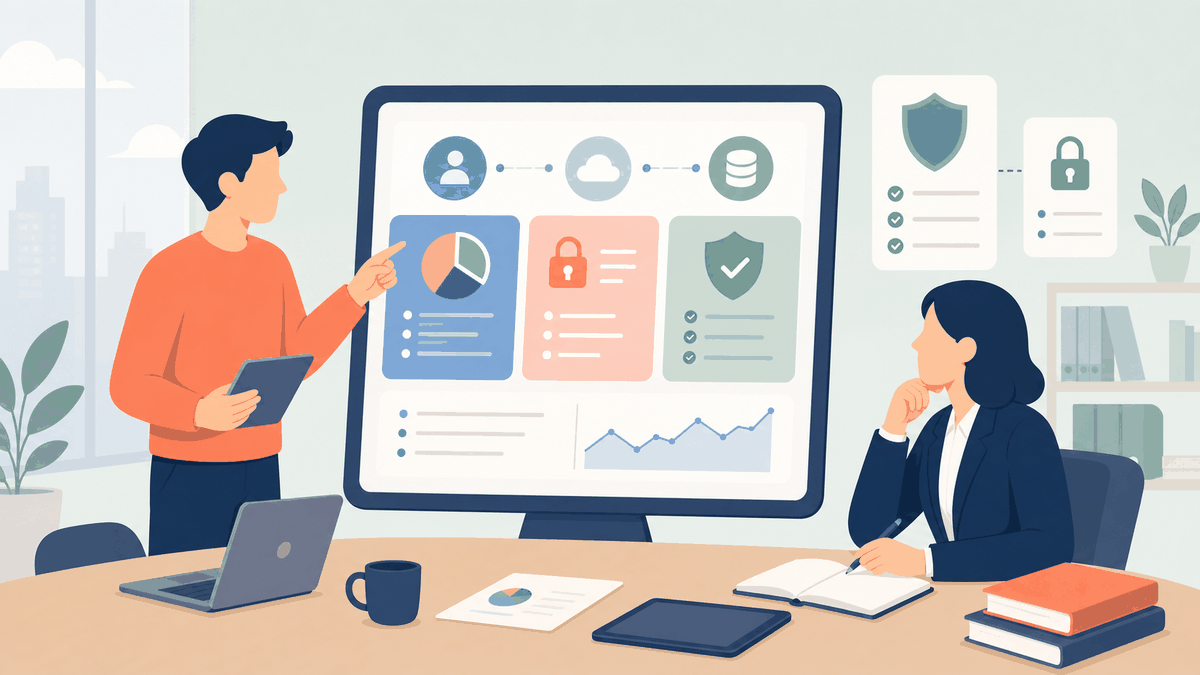
AI Vendor Due Diligence and Contract Review: Points to Check for Adopting Companies and Providers
A vendor's statement that data "will not be used for training" should be verified against the contract and the actual settings. In reviewing an AI vendor, compare the data flow, retention and deletion, responsibility for output, and conditions for trial use against your own intended use.
Read articleChange of Control Clauses: Points to Check for M&A, Capital Policy and Continuity of Business Relationships
Even fundraising through issuing new shares can fall within a CoC clause depending on the contract's definition. This article distinguishes notice from prior consent, and checks the carve-outs needed for ordinary capital policy, the effect of failing to obtain consent, and continuity of contracts after an acquisition.
Read articleCheckpoints for Reviewing Indemnity Clauses: Their Relationship with Damages, Third-Party Claims and Limitations of Liability
An indemnity clause sets out who handles the defense against third-party claims and who pays settlement amounts and attorneys' fees. Check whether the liability cap extends to indemnification and whether a short notice deadline could be an obstacle, together with insurance and the likelihood of recovery.
Read articleCheckpoints for Reviewing SLA Clauses: Practical Issues on Service Levels, Incident Response and Refunds
24-hour intake and 24-hour response are not the same promise. Checking the uptime formula and exclusions, as well as initial response and recovery targets, the conditions for claiming credits and the relationship with other remedies, reveals the actual scope of an SLA.
Read articleCheckpoints for Reviewing Subcontracting Clauses: Organizing the Risks for the Client and the Contractor
Whether the use of cloud services or outside personnel constitutes subcontracting is determined from the contract's definitions and the actual work. Distinguish the consent required under the contract from permission required by law, and decide in advance on the management of subcontractors, who can be claimed against in the event of an incident, and cost allocation.
Read articleCheckpoints for Reviewing Intellectual Property Ownership Clauses: Sorting Out Deliverables, Pre-Existing Assets and AI Use
Receiving delivery does not automatically transfer the copyright. Separate new work from pre-existing libraries, and with modification, provision to third parties and use after termination in view, decide which rights are assigned and what scope is licensed.
Read articleCheckpoints for Reviewing Franchise Agreements: Practical Issues for Franchisors and Franchisees
In franchising, the pre-contract earnings explanations are compared with the content of the agreement. In addition to royalties, designated purchasing, franchisor support and conditions on nearby store openings, the costs of withdrawal and non-compete restrictions also bear on the investment decision.
Read articleCheckpoints for Reviewing Distribution and Sales Agency Agreements: Practical Issues for Manufacturers and Distributors
The title "agency" alone does not tell you who handles contracts with customers or collection of payment. This article distinguishes agency, intermediary, resale and referral arrangements, and checks the conditions for remuneration, the scope of exclusivity, and how prices and advertising are controlled.
Read articleCheckpoints for Reviewing Consulting Agreements: Practical Issues for the Client and the Consultant
In consulting agreements, receiving advice is often confused with having business results guaranteed. Set specifically the scope of meetings and revisions to materials, the deals that count toward success fees, and the conditions for using pre-existing materials.
Read articleOEM Agreement Review Checklist: Practical Issues for the Ordering Party and the Manufacturer
When a product made under OEM turns out to be defective, the question is who bears the cause investigation and recall costs. Separate the ordering specifications from existing technology, and check inspection, approval of changes to manufacturing methods, and the treatment of molds and inventory on termination.
Read articleCheckpoints for Reviewing SES Agreements: Practical Issues for Clients and Vendors
In an SES agreement, beyond the quasi-mandate title, the question is who gives engineers their daily instructions. Check the scope of work and settlement of hours, rights to use deliverables, and handover upon departure against actual operations.
Read articleCheckpoints for Maintenance Agreements and System Maintenance Agreements: Scope of Services, SLAs, and Additional Fees
When a failure occurs, how much the monthly maintenance fee covers depends on the contract. Match the reception hours, recovery targets, and approval of additional fees against one another, and confirm that the necessary materials can be handed over when maintenance ends.
Read articleBasics of Reviewing Software Development Agreements: Definitions, Checklist, and Risks by Position
In development agreements, estimates made before specifications are fixed and requests for additional features can lead to later disputes over costs. In addition to change approvals and acceptance criteria, you should also check source code, existing assets, and the scope of responsibilities when moving into maintenance.
Read articleContracts for Work vs. Quasi-Mandate Contracts: Key Points When Reviewing Service Agreements
Contracts for work and quasi-mandates cannot be distinguished by the title or the presence of deliverables alone. Confirm the scope of the promise to complete and the obligation to perform services, and consider, contract by contract, when fees are paid, how fees are settled if the contract ends midway and how defects are handled.
Read articleBasics of Reviewing Service Agreements: Definitions, Checklist and Risks by Position
In a service agreement, the treatment of liability and fees changes depending on whether the contractor promises to complete the work or to provide support with due care. Match the clauses against the actual work, from the acceptance period and fees for additional work to rights to use existing tools.
Read articleNDA Review Basics: Definitions, a Checklist and Risks by Position
In an NDA, it is important to decide both the scope of the information to be protected and the conditions under which it can be handled in practice. The disclosing party and the receiving party care about different clauses regarding oral disclosure, sharing with investors and retention of backups.
Read articleWhat Are Governing Law, Agreed Jurisdiction and Arbitration Clauses? How to Design the Rules for Disputes in a Contract
The combination of governing law and the forum for disputes changes the burden of attorneys' fees, translation and enforcement of judgments. From choosing between litigation and arbitration to keeping internal records when accepting the counterparty's clause, there are matters worth considering before signing a contract.
Read articleWhat Is a Force Majeure Clause? Sorting Out Contractual Liability for Disasters, System Outages and Infectious Diseases
Even when a disaster or cloud outage occurs, not all contractual obligations are excused. The conditions and scope of exemption, notice and alternative measures, and termination and settlement if the situation is prolonged need to be decided in light of your actual supply and recovery capabilities.
Read articleWhat Is an Anti-Social Forces Clause? Key Points for Reviewing Anti-Social Forces Exclusion Clauses in Contracts
In an anti-social forces clause, check the persons covered, the prohibited conduct and the range of contracts that can be terminated upon breach. Do not decide on termination on suspicion alone; consider fact-finding and safe means of contact, and pay attention to payment obligations and the settlement of property that remain after termination.
Read articleWhat Is an Anti-Assignment Clause? What to Check for Transfers of Contractual Position, Assignments of Claims and Business Transfers
An anti-assignment clause does not immediately make an assignment of claims void. It is important to distinguish transfers of contractual position, assignments of accounts receivable and succession through company splits, and to check the scope and procedure for which consent is required.
Read articleWhat Is a Personal Information Handling Clause? Points to Check in Outsourcing and SaaS Agreements
Not every use of SaaS or AI constitutes entrustment under the law. You need to check the actual data flow and how the provider handles the data, and reflect in the clause the relationship with the DPA, provision to foreign countries and the allocation of roles in the event of a leak.
Read articleWhat Is a Confidentiality Clause? Review Practice for Contracts Other Than NDAs
Confidentiality clauses need to be checked in contracts other than NDAs as well. How day-to-day operations and end-of-contract management work depends on with whom information may be shared, whether independently developed information can be excluded, and how AI inputs and logs are handled.
Read articleWhat Is Breach of Contract? How It Differs from Non-Performance of Obligations and the Initial Response in Corporate Legal Practice
Even if the counterparty misses a delivery date, you cannot necessarily terminate right away. You need to distinguish the requirements for demand, termination and damages, and check your own performance, receipt of notices and the records that support your damage.
Read articleWhat Are Purchase Orders and Order Forms? Formation of Individual Contracts and the Relationship With Master Transaction Agreements
Issuing a purchase order does not always form an individual contract. You need to check whether acceptance has reached the other party and any special provisions in the master agreement, and confirm the agreed terms through to the priority of documents, specifications and costs upon changes or cancellation.
Read articleWhat Is a Memorandum or Amendment Memorandum? How It Differs From a Contract and What to Check in Amendment Clauses
The legal effect of a document is not determined by the name memorandum alone. You need to check its correspondence with the original contract and the date from which the change applies, and also watch out for restrictions on reducing the price of orders already placed. This article covers a short sample amendment clause and how to reflect the change in the contract register and invoicing after execution.
Read articleWhat Is a Contract? The Structure and How to Read It in Corporate Legal Practice
Even if a contract looks well formatted, problems remain if its terms differ from the specifications in the exhibits or from the internal approval. We explain how to confirm the important provisions for each contract type and the points to check before handing the contract over to the responsible departments.
Read articleWhat to Check When Reviewing Termination for Cause and Termination for Convenience Clauses
Whether you can terminate for a breach and whether you can terminate for convenience when business policy changes should be checked separately. We look at the conditions for demand and statutory termination, termination costs, and settlement and data handling at the end of the contract.
Read articleReviewing Damages and Limitation of Liability Clauses in Practice: How to Read Caps, Exceptions and Indirect Damages
Knowing only how many months of monthly fees the damages cap equals does not tell you the burden in the event of an incident. Check it against the contract unit used to count the cap, the damages excluded, the breaches carved out as exceptions, insurance and claim procedures.
Read articleIntellectual Property and Scope of Use to Check When Reviewing a License Agreement
Permission to post an image on a website does not necessarily mean it can be used in social media ads or at trade shows. Check the methods of use, the scope of exclusivity, how consideration is calculated, and the handling of inventory and data upon termination.
Read articleCheckpoints for Sales Agreements: How to Read Inspection and Acceptance, Risk of Loss and Contractual Non-Conformity Liability
In a sale, delivery, inspection and acceptance, transfer of title, and risk of loss should be checked separately. Notice and remedies when a non-conformity is found should also be checked against both the contract terms and the statutory conditions.
Read articleWhat Is a Master Transaction Agreement? Clauses to Review for Ongoing Transactions and the Relationship With Individual Contracts
When the master agreement and a purchase order differ on the acceptance inspection period or the damages cap, which one applies becomes a point of dispute. We check how individual contracts are formed and their priority relationship against the actual ordering procedures.
Read articleWhat Is Contract Management? Managing Renewals, Terminations and Performance of Obligations That Are Easily Overlooked after Signing
Missing a termination notice deadline can lead to an unneeded contract being renewed. Decide who watches the deadlines, and link memoranda and amendment agreements to the main contract so that the latest terms can be confirmed.
Read articleWhat Is Contract Execution? How It Differs from Contract Formation, and Signatures, Seals and E-Contracts Explained
Even if a signatory's identity can be verified, that person does not necessarily have authority to represent the company. This article covers checking that the approved version matches the executed version, whether schedules are attached, and where the contract will be stored after execution.
Read articleWhat Is Contract Review? How to Conduct Contract Reviews and Key Checkpoints in the Age of AI
In contract review, you check the body and the exhibits and prepare proposed revisions in light of the impact on the transaction. AI output is checked by a person, and materials for internal decision-making are prepared separately from comments for the counterparty.
Read articleWhat Is Contract Review Intake? The Information to Gather First to Speed Up Contract Review
Background that cannot be read from the contract must be confirmed with the requesting staff member. Having the reason for the desired signing date, the negotiation status, and related materials shared at intake makes it easier to decide the scope and priority of the review.
Read articleWhat Is a Contract? The Contract Basics to Grasp First in Corporate Legal Work
An agreement can be formed without a contract document, though there are statutory exceptions. Check separately the records showing the agreement, the signatory's authority and internal approval, and set terms that suit the transaction.
Read articleManufacturing Supply Agreements: Specifications, Acceptance Criteria and Handling Non-Conforming Products
If mass production begins while the meaning of sample approval and the acceptance criteria remain vague, disputes can arise over responsibility for defects. We review how specifications are agreed and the procedures for investigation, repair and cost allocation.
Read articleWarehouse Bailment Agreements (Depositor Side): Disclosure Obligations and Incident Response
When an incident affects deposited goods, decisions on suspending sales or making insurance claims require notification and records. In addition to storage conditions, set out in the contract the procedures for communication and the provision of materials after an incident is discovered.
Read articleWarehouse Bailment Agreements (Bailee Side): Storage Conditions, Scope of Liability, and Delayed Collection
If it is unclear what condition the goods were in when the warehouse accepted them, liability becomes hard to determine after an accident. We review the items the bailor must declare, the scope of inspection on receipt, and the storage conditions together.
Read articleWhen Reviewing a Logistics Outsourcing Agreement, Align the Scope of Liability with On-Site Operations First
If it remains unclear which tasks are included in the logistics service fee, negotiating additional fees becomes difficult. Also check the liability cap and the scope of insurance coverage against the on-site work specifications.
Read articleIndustrial Waste Disposal Contracts: Disposal Methods, Final Disposal Sites, and WDS
When entrusting intermediate treatment, also check the final disposal site that follows. Confirm the treatment route, including appendices incorporated into the contract, and compare the WDS and analytical materials against the disposal method.
Read articleIndustrial Waste Collection and Transport Contracts: Checking Permits and Transshipment Storage
Collection and transport permits should be checked against the areas where loading and unloading actually take place and the types of waste. Arrival at the transport destination alone does not confirm final disposal, and the disposal contract and manifests also need to be managed.
Read articleIndustrial Waste Disposal Outsourcing Agreements: On-Site Information Must Be Checked Even with AI Review
Even if a provision requires permits to be attached, whether those permits cover the entrusted work must be checked separately. The actual properties of the waste and the disposal route are matched against the permits and the WDS.
Read articleIn the AI Era, Contract Review Standards Are Best Organized as a Legal Playbook
Even for the same clause, the acceptable range changes with the company's business and the transaction terms. Recording the reasons for decisions and whom to confirm with in a legal playbook makes it easier to evaluate AI output and advice from outside attorneys.
Read articleWhat Startups Should Check Before Signing with CVCs and Corporate Partners
Alliance terms with a corporate partner can restrict sales to other companies or the next financing. We check how far the results of joint development can be used, together with the terms of the investment and the business alliance.
Read articleA Non-Compete Clause Is Not Better Just Because It Is Broad
A post-employment non-compete restriction does not become valid just because it is written broadly. Consider the work covered, the period, and compensation in light of the interests the company is protecting and the burden on the individual's choice of occupation.
Read articleTerms of Service and Privacy Policies Should Be Reviewed Every Time Your Business Changes
When changing pricing or features, check the terms of service and privacy policy against the actual screens. It is important to address separately how amended terms apply to existing users and the review of the purposes of use and external provision of personal information.
Read articleService Agreements, the Torihiki Tekiseika Act (Formerly the Subcontract Act) and the New Freelance Act: Points to Review After the Amendments
The key points in complying with the Torihiki Tekiseika Act and the Freelance Act are specifying terms at the time of ordering and payment deadlines based on the date of receipt. We examine situations where delayed acceptance inspection, additional revisions and deductions of fees become problems, from both the contract and the actual ordering and payment procedures.
Read articleAI Services and Personal Information Protection: What Companies Should Check First
Whether sending data to an external AI constitutes entrustment or third-party provision is determined based on the purpose of use and how the data is actually handled. The conditions for cross-border transfer and the impact of output on individuals should also be checked.
Read articleHow to Prepare SaaS Terms of Use and a Privacy Policy Before Launch
What goes into the terms of use changes with how fees are calculated, AI features, and how customer data is handled. The privacy policy should also be drafted by checking it against how information is actually acquired and used.
Read articleDesigning Contract Review Comments: Writing Separately for Internal Readers and the Counterparty
Internally, convey the risks and the options for a decision; to the counterparty, convey the reasons for requesting revisions. Using a damages clause as an example, this article considers how comments differ by recipient.
Read articleWhat to Give Outside Attorneys First When Requesting a Contract Review
When sending a contract, include the background of the transaction as well. Knowing the relationship with the counterparty, the signing deadline and internal concerns conveys the premises for the review. Also share the intended recipient and format of the comments you want.
Read articleThe Legal Issues to Check First in the Terms of Use of Generative AI Services
The contract terms to check depend on what you enter into an AI service and how you use its output. Confirm use for training, confidentiality, rights and the handling of personal information before introduction.
Read articlePreferred Share Investment Agreements: The Terms Founders Should Treat as Business Decisions
In a preferred share investment agreement, the distribution in a deemed liquidation and the scope of veto rights affect business decisions after the round. Including preemptive rights and the founders' personal obligations, there are matters worth checking against the business plan and the terms of a future sale.
Read articleA Founders' Agreement Can Only Be Made While the Founders Get Along
How should the shares of a departing founder be handled? Once the relationship has soured, it becomes hard to agree on the purchase price and terms, so it is important to discuss these matters while trust still exists. Non-competition and decision-making rules are also decided in light of the interests of both the company and the individual.
Read articleWhy Does Contract Review Take So Long?
The waiting time in contract review includes not only reading time but also the back-and-forth of confirmations and approvals with the business divisions. This article considers improvements by matching the depth of review to the risk and revisiting the request information and response format.
Read articleSeller-Side Preparation for Legal Due Diligence: Building a Contract Register and Keeping Records in Ordinary Times
An acquisition review checks not only whether documents exist but also whether the company understands its risks and can explain them. By building a contract register, recording the reasons for accepting exceptional terms, confirming shareholder relations, and preparing a simple data room in ordinary times, you can be ready for issues raised by the buyer.
Read articleBrowse by keyword
Jump into a granular legal keyword and browse the related articles.