AI Service Legal
Legal issues for companies that provide or use AI services, including terms, privacy, AI governance, and intellectual property.
Featured
A curated selection of articles to read first from LegalAgent AI Legal Lab.
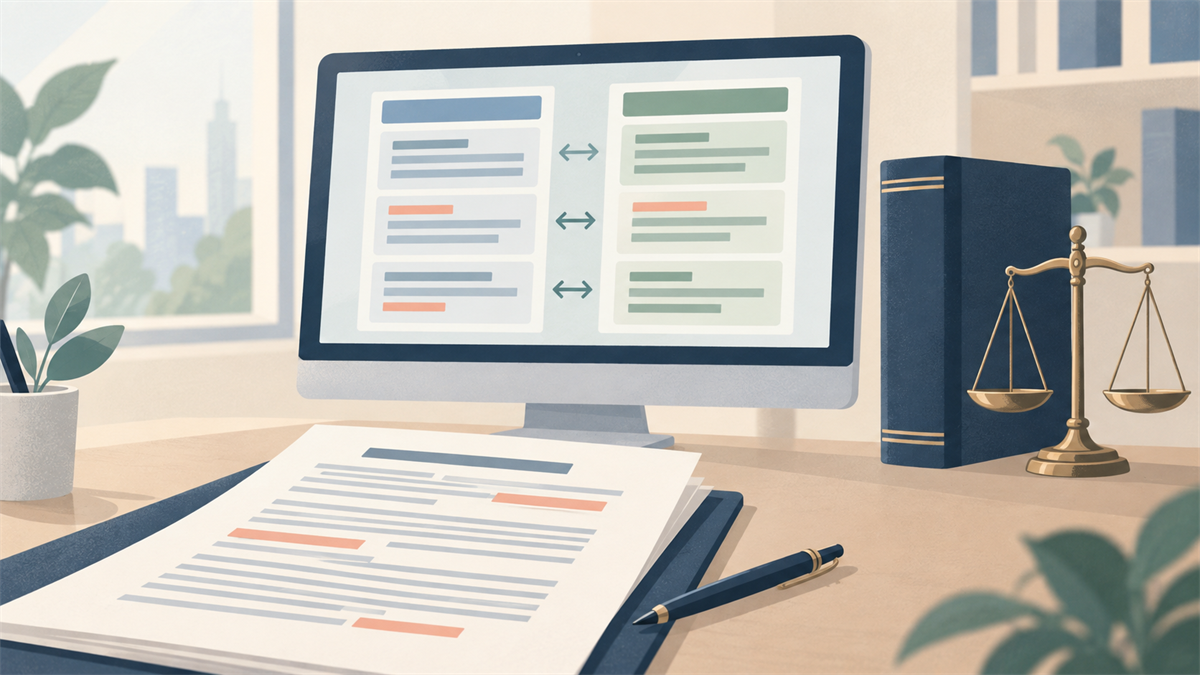
Using AI for Contract Review and Article 72 of the Attorney Act: What Legal Teams Can Leave to AI
How to deal with the unauthorized-practice rule in Article 72 of the Attorney Act when using AI for contract review is a challenge for corporate legal work. Based on the Ministry of Justice guidelines, this article shows the boundary between routine work that can be left to AI and matters with case-ness that require consulting an attorney, along with practical steps for companies to adopt AI safely.
Read article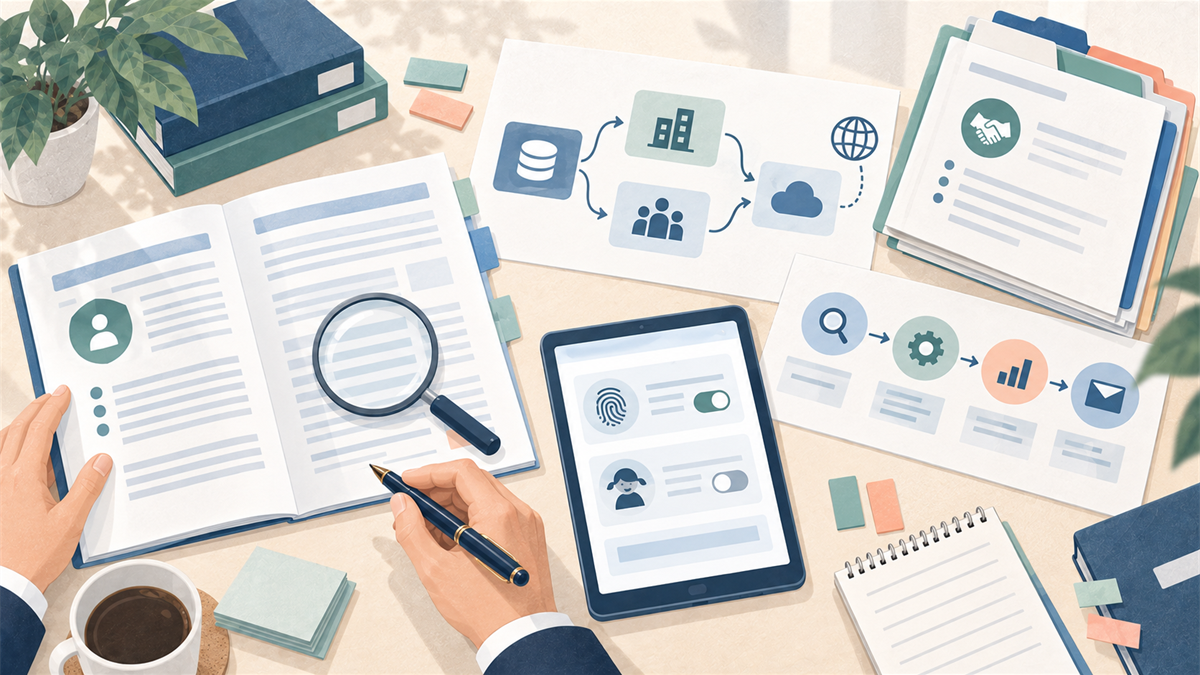
The Amended Act on the Protection of Personal Information: Where Things Stand After Promulgation and What Companies Should Prepare
The amended Act on the Protection of Personal Information (Act No. 56), promulgated on July 17, 2026, does not yet have an effective date. In light of the administrative surcharge system and the rules on biometric information, here is where things stand after promulgation and the key points of internal reviews that can be started in advance.
Read article
Initial Response to a Personal Data Breach: Reporting Deadlines and a Timeline of What to Do
This article explains what must be reported when a personal data leak is suspected, the deadlines for preliminary and final reports, notification to individuals, preservation of evidence and dealing with contractors. It covers the practice of recording who learned of the situation and when, and of meeting reporting deadlines while preventing harm in parallel.
Read article
Legal Issues for AI Companion and AI Partner Services: Minors, Personal Information and Safety Design
In AI companion services, where users disclose their loneliness and medical history, managing conversation logs and specifying the purposes of use are essential. Everything from payment paths for minors to crisis response design needs to be reviewed from the perspectives of both the screens and operations.
Read articleAI Service Legal articles
Legal issues for companies that provide or use AI services, including terms, privacy, AI governance, and intellectual property.
Using AI for Contract Review and Article 72 of the Attorney Act: What Legal Teams Can Leave to AI
How to deal with the unauthorized-practice rule in Article 72 of the Attorney Act when using AI for contract review is a challenge for corporate legal work. Based on the Ministry of Justice guidelines, this article shows the boundary between routine work that can be left to AI and matters with case-ness that require consulting an attorney, along with practical steps for companies to adopt AI safely.
Read articleThe Amended Act on the Protection of Personal Information: Where Things Stand After Promulgation and What Companies Should Prepare
The amended Act on the Protection of Personal Information (Act No. 56), promulgated on July 17, 2026, does not yet have an effective date. In light of the administrative surcharge system and the rules on biometric information, here is where things stand after promulgation and the key points of internal reviews that can be started in advance.
Read articleInitial Response to a Personal Data Breach: Reporting Deadlines and a Timeline of What to Do
This article explains what must be reported when a personal data leak is suspected, the deadlines for preliminary and final reports, notification to individuals, preservation of evidence and dealing with contractors. It covers the practice of recording who learned of the situation and when, and of meeting reporting deadlines while preventing harm in parallel.
Read articleLegal Issues for AI Companion and AI Partner Services: Minors, Personal Information and Safety Design
In AI companion services, where users disclose their loneliness and medical history, managing conversation logs and specifying the purposes of use are essential. Everything from payment paths for minors to crisis response design needs to be reviewed from the perspectives of both the screens and operations.
Read article
Preparing the Data Room for Legal Due Diligence: Version Control and Organizing Documents So AI Can Read Them
Even when using AI in legal DD, you need to match executed versions with amendment memorandums and check extraction results against the source materials. This article explains how to prepare a document management spreadsheet and the handling of personal and confidential information to check before disclosing to external AI.
Read article
AI Meeting Minutes Tools and Confidentiality Obligations: Gaps That Arise When Recording and Inputting NDA-Covered Meetings
Recording an NDA-covered meeting with an AI minutes tool may send the audio to an external service. Separate notice of recording from third-party disclosure, check the terms of use and the handling of personal information, and set internal operating rules.
Read article
Training Dataset License Agreements: Dividing Rights Between the Data Provider and the Developer
When you provide your company's data for AI development, who can use the resulting model? This article distinguishes Article 30-4 of the Copyright Act from contractual restrictions and covers the points to check before negotiating, from the handling of personal information to conditions of use after the contract ends.
Read article
Always Check Article Numbers and Sources Yourself: A Pitfall of Generative AI
Even when an article number or the date of a judgment is specific, the source does not necessarily exist. Using the payment due date under the Torihiki Tekiseika Act as an example, this column shows how to confirm the content of a provision, when it applies and the premises of a court decision in the original sources.
Read articleLegal Risks of Deepfake and Impersonation Advertising, and the Initial Response for PR Legal
For AI advertising that uses faces or voices, check whether it misleads people about the person's involvement and whether you have the rights to use the materials. If you fall victim to impersonation, promptly preserve evidence, request takedowns and issue any necessary warnings.
Read articleDesigning Log Audits and the Allocation of Responsibility for AI Agents
To prepare for AI agent malfunctions, record the data referenced and the history of execution and approval. Narrow down the information kept in logs and the retention period, and decide in advance the roles of internal staff and vendors and the procedures for stopping operations and responding to incidents.
Read articleHow to Create a Generative AI Use Policy: Checkpoints for Internal Rules, Information Management and Allocation of Responsibility
"Do not enter confidential information" alone does not align judgments on the front line. Set out concrete input examples, exception requests, the handling of personal accounts and human review of outputs, and connect them to each department's work and to the reporting procedure for incidents.
Read articleAI Vendor Due Diligence and Contract Review: Points to Check for Adopting Companies and Providers
A vendor's statement that data "will not be used for training" should be verified against the contract and the actual settings. In reviewing an AI vendor, compare the data flow, retention and deletion, responsibility for output, and conditions for trial use against your own intended use.
Read articleGenerative AI, Copyright and Training Data Checkpoints: Practical Issues for Developers and Users
Even data that can be used for training cannot necessarily be published freely as output. Check the conditions under which data was obtained, the purpose of use and the relationship with existing works at each stage, and make judgments in light of terms of use and contracts with customers.
Read articleCheckpoints for Complying with Japan's AI Act and the AI Guidelines for Business
Responsibilities under the AI Act and the measures described in the guidelines should be checked separately. Take stock of the services and data in use, and confirm that approval of input, review of output, explanations to customers and incident response fit actual operations.
Read article
Checkpoints for Reviewing SLA Clauses: Practical Issues on Service Levels, Incident Response and Refunds
24-hour intake and 24-hour response are not the same promise. Checking the uptime formula and exclusions, as well as initial response and recovery targets, the conditions for claiming credits and the relationship with other remedies, reveals the actual scope of an SLA.
Read articleCheckpoints for Reviewing Intellectual Property Ownership Clauses: Sorting Out Deliverables, Pre-Existing Assets and AI Use
Receiving delivery does not automatically transfer the copyright. Separate new work from pre-existing libraries, and with modification, provision to third parties and use after termination in view, decide which rights are assigned and what scope is licensed.
Read articleThe First Legal Checklist a Company Launching an AI Service Should Build
Legal review of an AI service starts with understanding the input data and where it is sent externally. This article turns copyright, personal information and responses to errors in output into a checklist you can use at each stage: development, launch and feature changes.
Read articleTerms of Service and Privacy Policies Should Be Reviewed Every Time Your Business Changes
When changing pricing or features, check the terms of service and privacy policy against the actual screens. It is important to address separately how amended terms apply to existing users and the review of the purposes of use and external provision of personal information.
Read articleA Checklist for Discussing AI Governance at the Board of Directors
The board of directors checks how management is responding to material AI risks. These items help it examine how input data and outputs are used, internal training, incident response and the timing of reviews.
Read articleAI Services and Personal Information Protection: What Companies Should Check First
Whether sending data to an external AI constitutes entrustment or third-party provision is determined based on the purpose of use and how the data is actually handled. The conditions for cross-border transfer and the impact of output on individuals should also be checked.
Read articleHow to Prepare SaaS Terms of Use and a Privacy Policy Before Launch
What goes into the terms of use changes with how fees are calculated, AI features, and how customer data is handled. The privacy policy should also be drafted by checking it against how information is actually acquired and used.
Read articleThe Legal Issues to Check First in the Terms of Use of Generative AI Services
The contract terms to check depend on what you enter into an AI service and how you use its output. Confirm use for training, confidentiality, rights and the handling of personal information before introduction.
Read articleInternal Usage Rules Alone Are Not Enough for AI Governance
A list of information that must not be entered can still leave people on the ground unsure what to do. Decide together the information and tasks involved, who reviews outputs, and the contract terms of external services.
Read articlePreferred Share Investment Agreements: The Terms Founders Should Treat as Business Decisions
In a preferred share investment agreement, the distribution in a deemed liquidation and the scope of veto rights affect business decisions after the round. Including preemptive rights and the founders' personal obligations, there are matters worth checking against the business plan and the terms of a future sale.
Read articleBrowse by keyword
Jump into a granular legal keyword and browse the related articles.