How solo legal teams can use legal outsourcing

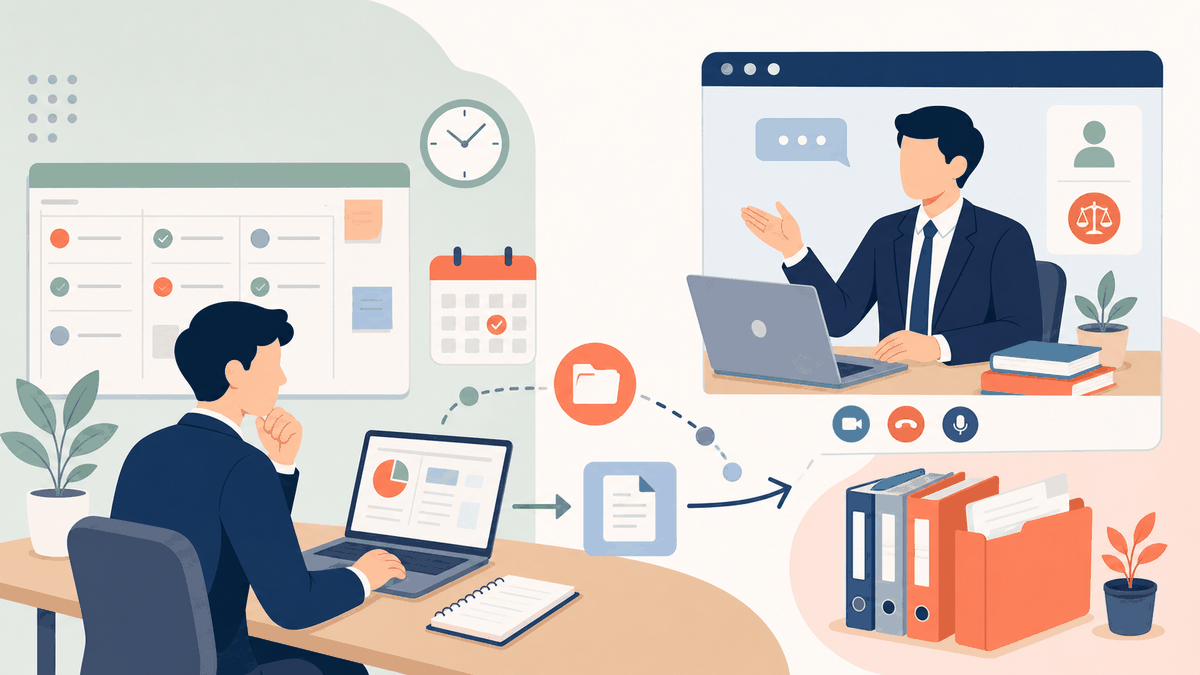
Hello, this is Legal Agent.
Contract reviews, privacy questions, fundraising support, and rules for internal AI adoption: at startups and growth companies, this diverse workload often falls on a single legal counsel or someone managing legal affairs alongside operational duties. Even an experienced professional cannot absorb every request simultaneously. Deadlines overlap, business teams send urgent chat inquiries, and little time remains to study unfamiliar legal areas or prepare strategic briefings for executive management. Engaging external legal outsourcing can provide meaningful relief, but treating outside support merely as a piecework contract vendor rarely delivers sustainable value.
What outsourcing means for a solo legal function
For an organization with a single legal counsel or a lean department, legal outsourcing represents ongoing collaboration with external counsel or an external legal team to handle contract reviews, internal policy development, and key transaction guidance. In practice, this functions as an external extension of the in-house team rather than a series of isolated document reviews. The working scope depends on negotiated service parameters rather than whether the arrangement is labeled a retainer or an outsourcing contract. If an in-house counsel must re-explain the business background for every new ticket, the company will struggle to build an enduring internal decision standard. A well-designed outsourcing setup defines intake channels, prioritization criteria, comment depth, and knowledge sharing. It should also establish which matters are decided internally, which are escalated to external counsel, and which the in-house counsel can resolve independently on a first pass. As AI tools increasingly perform first-pass contract reads, establishing who reviews AI output and how refined comments reach business units forms part of this foundational operational design.
Why volume and strategic responsibility compound together
External outsourcing is especially useful because a solo legal role bears heavy weight across two dimensions: high contract volume and the responsibility of helping the company decide which risks to accept, negotiate, or escalate. Daily workloads span non-disclosure agreements, master service contracts, and SaaS vendor terms. Each agreement demands nuanced judgment regarding commercial relationships, financial impact, and consistency with prior deals, alongside a review of the clause wording. Institutional knowledge often resides in one person's head, while complex subjects such as cross-border data protection or specialized commercial regulations can emerge abruptly with urgent turnaround expectations. Structured effectively, outsourcing enables routine matters to move swiftly while complex questions receive senior external input early. This evolution allows in-house counsel to move from carrying every task alone to orchestrating external resources with deep understanding of company objectives.
Operational terms to establish before starting
Before launching an outsourcing engagement, companies should define the operational scope (whether limited to commercial contract reviews or extended to internal governance, equity financing, and early dispute management) and establish a clear intake process detailing request channels and necessary background materials from business teams. Setting tiered response times based on commercial urgency prevents the expectation that every matter requires same-day turnaround. Parties should also agree on expected deliverable formats: whether redlines alone suffice, or if practical comments, executive summaries, and direct counterparty negotiation language are needed, including whether in-house legal will edit outside advice before sharing it with internal departments. Aligning beforehand on baseline positions for liability caps, governing law, and personal data handling prevents inconsistent positions across transactions, while systematic documentation ensures past findings build institutional knowledge. Finally, parties should agree on fee structures and maintain strict access controls and confidentiality protocols as team members join or depart.
Common pitfalls in external legal partnerships
Companies often make the mistake of outsourcing matters continuously without developing internal institutional capability. The true benefit of outsourcing materializes when external guidance is converted into reusable internal standards. Conversely, business teams may bypass legal review if the intake workflow is cumbersome or if legal comments consist of rigid legalese. Outside counsel can easily default to generic advice if they fail to grasp the company's practical risk tolerance and commercial stance. Over-polishing standard language when a clear flag on core business risks is needed can also create friction; counsel should distinguish points intended for the counterparty from internal strategic notes. Both parties must clarify specific responsibilities from the outset: who gathers business facts, who interfaces directly with the counterparty, and who retains ultimate decision-making authority. Outside counsel provides the greatest value when functioning as an active operational partner rather than an impersonal hand-off queue.
Integrating AI into legal operations
Generative AI can significantly assist legal teams by extracting key clauses, categorizing counterparty redlines, drafting internal summaries, and searching prior precedents. AI assistance with preliminary contract reads can give in-house counsel more time for legal and commercial judgment. However, implementing AI does not automatically reduce operational pressure: if prompt formulation, error correction, and output review still fall entirely upon a single person, the overall workload can increase. Before deploying AI tools for contract review, companies should establish clear rules regarding eligible transaction types, data input permissions, human review responsibilities, and criteria for escalating complex issues to external counsel. Because AI lacks context regarding past commercial concessions or current risk tolerance, it may flag standard liability caps as dangerous while overlooking high-risk operational terms unique to the business model. With structured guardrails in place, AI serves as an effective support tool rather than an autonomous substitute: it accelerates issue identification and information retrieval, while outside counsel offers seasoned legal analysis and in-house counsel ensures ultimate alignment with business strategy.