Legal Agent: a Word AI Agent specialized for legal work


Hello, this is Legal Agent.
An associate inside Microsoft Word
We have launched Legal Agent, a Word AI Agent built specifically for legal work. Details are available on the product page.
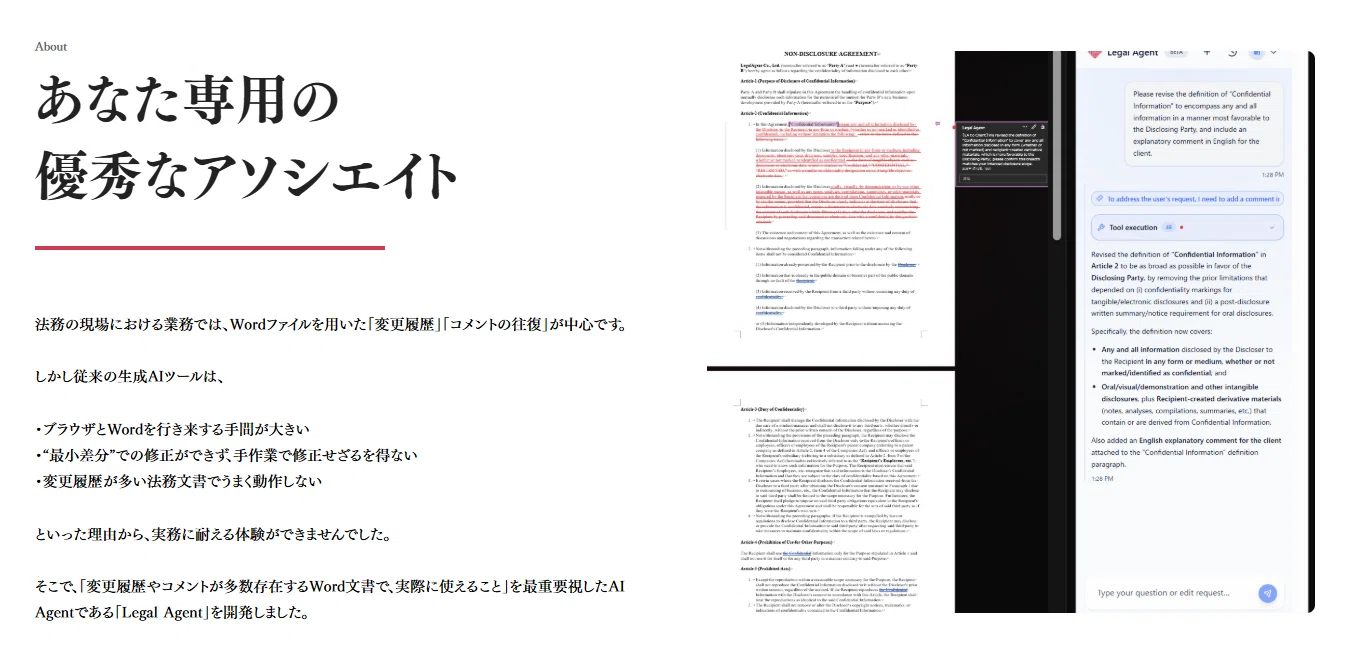
Legal Agent is an AI Agent designed to assist with practical legal work. It operates directly inside your Word document, revising text according to your instructions and inserting comments where necessary. Functioning as a dedicated associate right inside Word, Legal Agent supports efficient drafting and revision. A Free Plan with initial credits is available for testing.
Editing friction and the limits of general-purpose tools
Lawyers and corporate legal departments aim to serve clients and business teams promptly, efficiently, and to high professional standards. In daily practice, however, much of legal document work remains manual, and producing thorough output requires substantial human labor. In my experience, recruiting and training legal personnel can take considerable time and money, and departures can interrupt that investment.
In firms with several review layers, tasks may pass through a sequence like this: staff prepare an initial cut, an associate reviews, a partner provides comments, staff revise, the associate re-checks, the partner signs off, and the associate finally prepares delivery. When each step depends on a busy professional, work can sit between reviews. While firms want to respond quickly, the multi-layered process can become a bottleneck, making individual productivity an urgent operational priority.
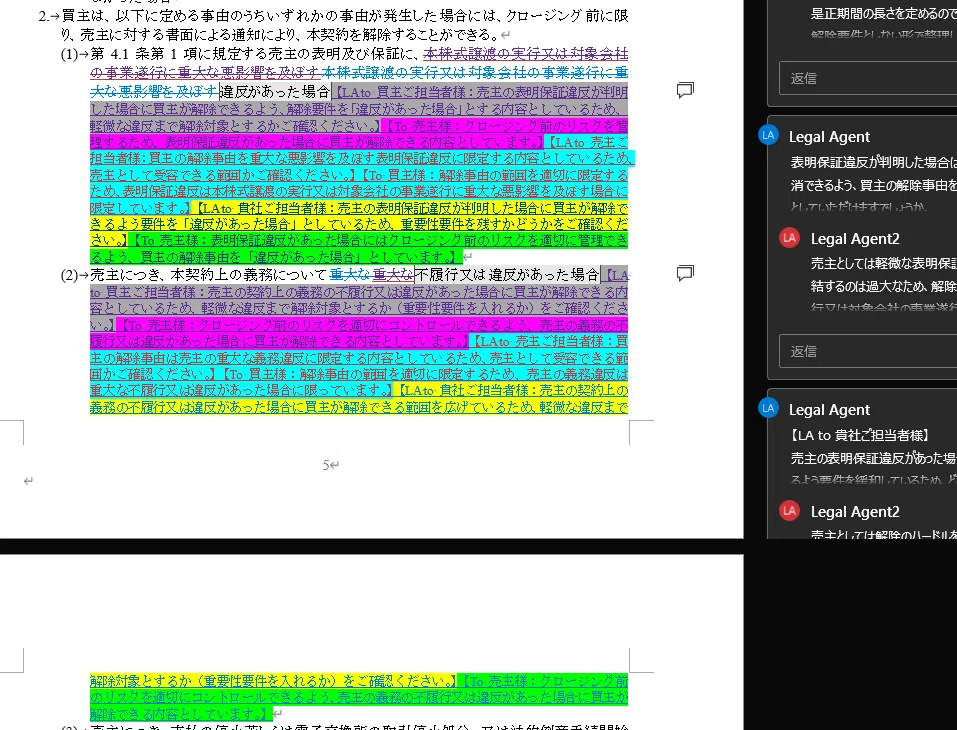
A colorful, chaotic Word document, and this is one of the tidier examples.
Much of corporate legal work centers on editing in Word, exchanging drafts with tracked changes, and using comments to convey intent. Beyond initial legal analysis, practical productivity depends on:
- Clean implementation of Word edits
- Clear communication of intent in comments
- Consistent drafting accuracy across multiple revision rounds
- Legibility of accumulated tracked changes
The earlier tools I tested often produced text that did not fit the unusual documents, transactions, and client preferences I encountered. When generative AI arrived, it offered greater drafting flexibility, but applying general-purpose models to legal documents revealed distinct practical hurdles during testing. Switching back and forth between a web browser and Word interrupted the working rhythm. In the environments I tested at the time, general tools could not reliably interpret existing tracked changes or embedded comments, struggled to insert minimal targeted revisions into documents with long revision histories, frequently produced excessive tracked changes that increased review costs, and required manual copying that broke the natural flow of work. For daily legal practice, these friction points demonstrated that AI needed to function directly within Word.
Direct document revision and practical time savings
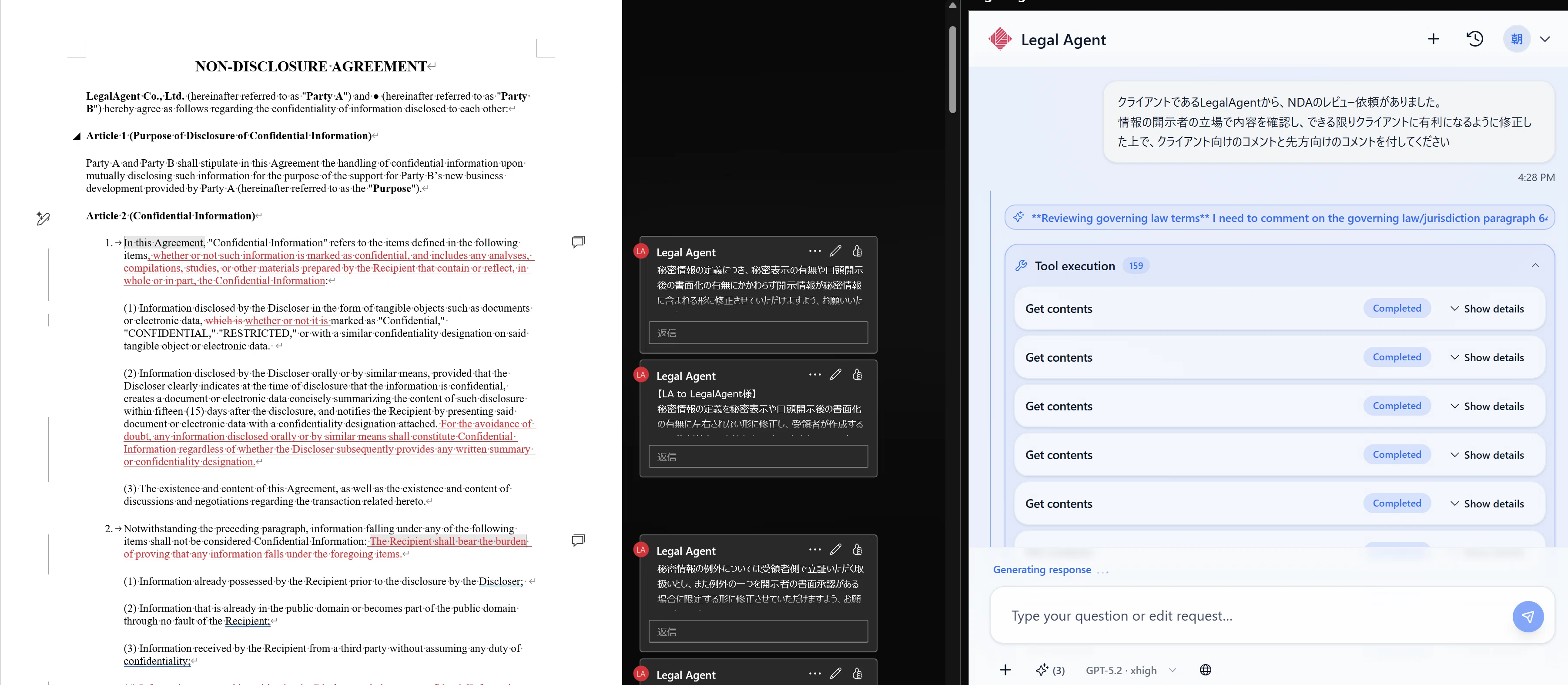
Legal Agent was built around a straightforward objective: giving legal professionals an AI experience that operates entirely within Word for drafting, targeted revision, and commenting. The core design test was practical: whether the tool genuinely reduced the daily burden of legal document work.
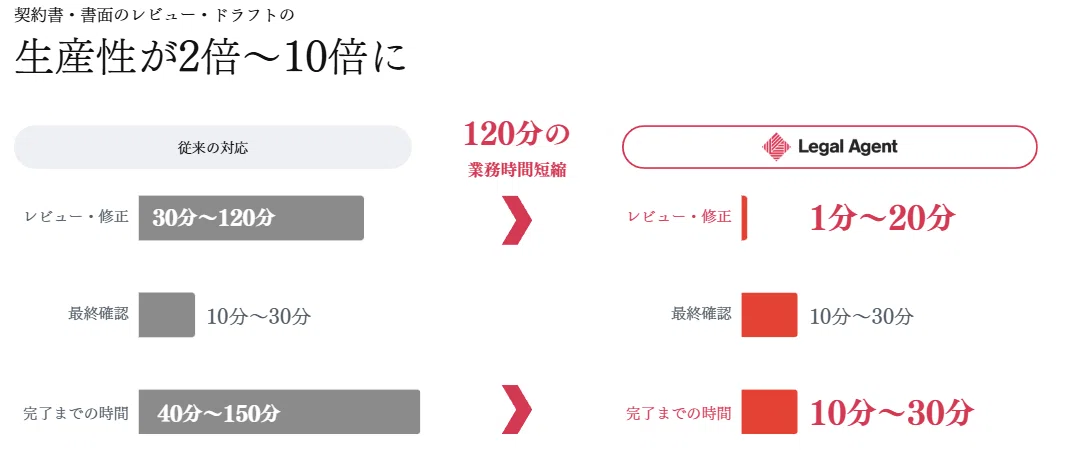
In the author's own practice, integrating Legal Agent produced a noticeable reduction in document turnaround time. For example, in an investment agreement review that previously required over two hours, working through the issues with the agent and revising the text accordingly allowed the review to close with roughly ten minutes of personal verification, completing the task in approximately twenty minutes overall. Similarly, providing a meeting record and source documents was sufficient to generate a working draft of a certified letter in about five minutes, and delegating English-language contract reviews produced a substantial working draft from which detailed attorney review could immediately begin. These experiences reflect personal historical impressions in specific matters rather than universal benchmarks or guaranteed performance. Time saved varies by transaction, and AI-assisted drafting never replaces thorough professional review.

In handling ongoing client advisory and individual matters, our service generally aims to respond within one business day, with delivery schedules adjusted to the scope and complexity of the matter. Working with AI does not provide an unconditional delivery guarantee, nor does it eliminate the necessity of independent legal judgment.
Practical applications across corporate legal matters
Legal Agent is designed around a clear operational goal: allowing a lawyer to move quickly on client priorities by delegating initial preparation to a capable associate. The lawyer remains responsible for verifying source materials, applicable statutory rules, factual assumptions, and all proposed changes before any work is delivered. The tool does not automatically transmit documents to outside parties.
Practical applications span common corporate legal tasks:
One use is to attach client meeting notes and ask the agent to revise the agreement, then compare its tracked changes with the decisions recorded in those notes. Providing a terms-of-service template alongside client chat records, a service overview, meeting notes, and comparable terms produces an initial working draft of the terms of service.
For contracts that have undergone multiple rounds of negotiation, instructing the agent to examine the counterparty's revised draft, make necessary edits, add an internal explanation for the client, and include a reply comment to the other side generates both the proposed revisions and the negotiation remarks.
In transaction support, opening a share purchase agreement (SPA), attaching the due diligence report, corporate registry, and shareholder register, and instructing the agent to update the SPA based on those findings produces revisions to check against the attached records.
Similarly, opening a due diligence report template, applying review guidelines, and attaching counterparty contracts alongside prior due diligence reports produces a structured report with summary tables outlining identified risks and proposed mitigations. Providing meeting minutes and a target company shareholder register allows the agent to summarize shareholder history directly within the report.
At the contract finalization stage, providing signatory information and corporate registry records received from the client populates the signature block based on those documents, without guessing or assuming unverified details. For dispute matters, attaching counterparty court filings, rebuttal notes, meeting minutes, and evidentiary materials allows the agent to prepare a preliminary court brief for attorney review. For lengthy English-language contracts, providing client instructions and reference materials prepares a revised draft with explanatory comments.
In all of these scenarios, AI prepares the groundwork, while an attorney verifies the underlying facts, checks the legal analysis, and makes the final determination.
Add-in setup and account access
Setup involves four direct steps:
First, in Word's Home tab, open Add-ins and search for "legalagent."
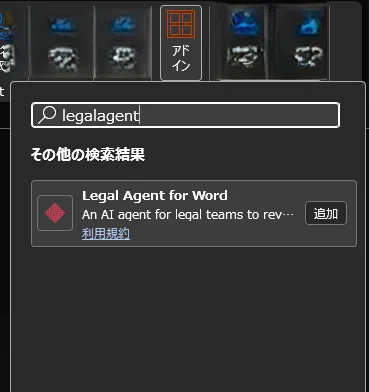
Second, add "Legal Agent for Word" from the search results. Third, sign in using a Google or Microsoft account.
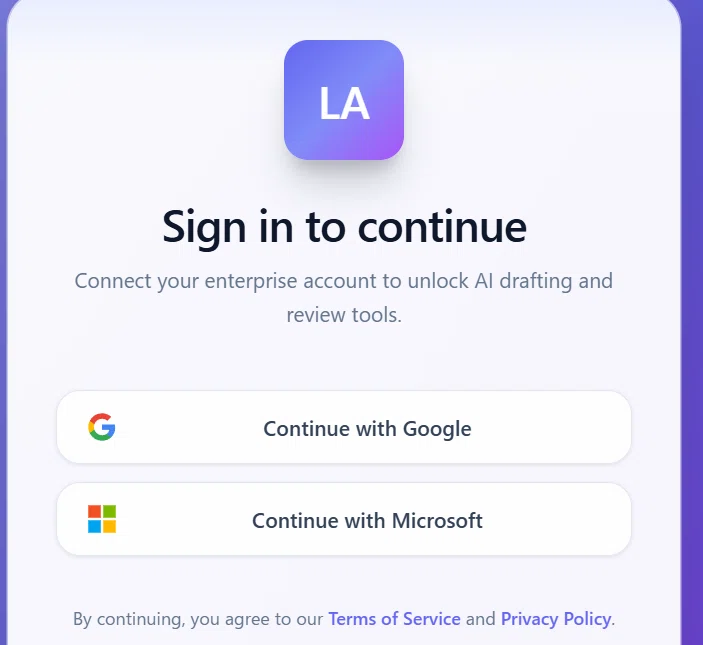
Fourth, once signed in, you can begin using Legal Agent on the Free Plan immediately. Installation and availability can depend on individual Word versions and organizational administrator permissions, so local IT policies may apply.
Legal Agent is built to refine how legal drafting and document revision take place. You can bring your own dedicated, expert associate into Word and test the functionality through the Free Plan.