Internal Use and Copyright: What to Check When Sharing Articles, Preparing Training Materials, and Using AI Summaries

Hello, I'm Noriaki Asato, Representative Attorney at LegalAgent.
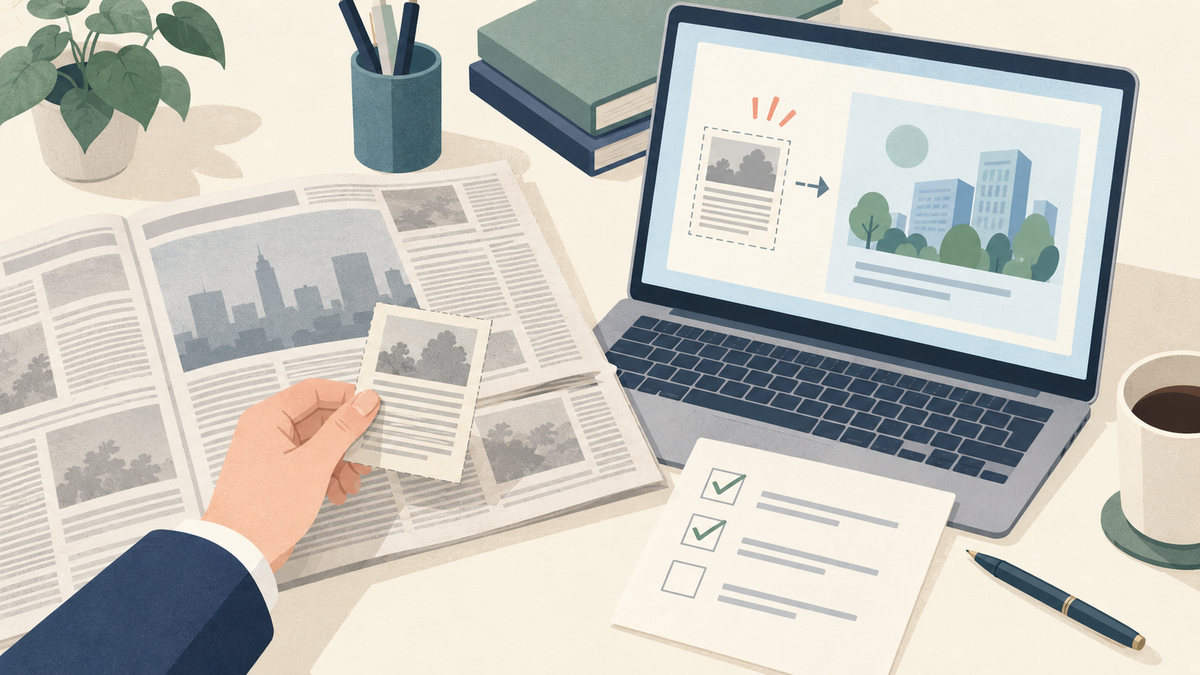
Handing out a trade newspaper article to meeting attendees. Pasting a screenshot of a web news page into an internal chat. Using an outside chart in training materials. These are all everyday tasks, but even when the material is not published outside the company, permission from the copyright holder may be required.
The core questions are whether the use involves rights such as the reproduction right, whether an exception such as quotation applies, and how far the use is licensed by contract. Handing out paper copies and saving to the cloud may involve different rights and contractual conditions. When an article is entered into generative AI to be summarized, you also need to check the matter, including the input and the sharing of the output.
Reproduction for Business Purposes and the Scope of Private Use
Article 21 of the Copyright Act (Japanese) provides that the author has the exclusive right to reproduce the work. Copying or scanning an article, taking a screenshot of a page, and saving text by pasting it are all at issue as acts of reproducing a work. Having purchased the original newspaper or book is a separate matter from being able to reproduce and use its contents.
Article 30, paragraph 1 of the same Act permits reproduction by the person who will use the work, subject to certain exclusions, where the purpose is personal use or use within the home or a similarly limited circle. This "private use" is not a condition that can be satisfied simply by limiting access to within the company. Copying materials as part of the company's business and distributing them to colleagues and officers is usually considered not to fall within this scope.
Even for materials an employee will read alone, reproduction for work purposes cannot automatically be said to be private use. On the other hand, where an employee uses a book at the company for personal study unrelated to work, the matter is judged according to the purpose of use and other circumstances. It is important to check not only the equipment used and the number of copies but also the purpose for which the reproduction is made.
Copyright protects creative expressions of thoughts or sentiments. Article 10, paragraph 2 of the Act excludes from literary works miscellaneous news and reports of current events that merely convey facts. However, articles in newspapers and on news sites include the reporter's expression, commentary, photographs and so on. Conveying reported facts in your own words and copying an article's text or photographs as they are must be treated separately.
How Rights Differ by Recipients and Network
When copied materials are placed in a cloud service that many employees can view, check the public transmission right in addition to the reproduction right. Article 23, paragraph 1 of the Act sets out the right of public transmission, and for automatic public transmission it also covers making transmittable. Under Article 2, paragraph 5 of the Act, "the public" includes a specific and large number of persons.
Even if the names of viewers are known and the service requires login, it can constitute the public if a large number of employees are covered. In my view, for shared folders accessible from offices nationwide or articles posted to a company-wide chat, a company cannot skip checking the public transmission right solely on the ground that the use is internal.
On the other hand, the definition of public transmission contains an exclusion for transmissions between equipment within the same premises. Article 2, paragraph 1, item 7-2 of the Act provides for this exclusion, except for transmissions of computer program works, and where the premises are occupied by multiple persons, only within the area occupied by the same person. Accordingly, check transmissions completed entirely within the premises separately from those that go through an external cloud or another office.
Even if this exclusion applies, the reproduction made when creating the file must be considered separately. Even where a transmission to a small number of people does not constitute "the public," the reproduction still needs to be checked. Understanding the format of the materials, the storage location, the range of viewers and the actual transmission route allows you to identify specifically what permissions are needed.
Checking Quotation and Source Attribution
The Scope Necessary for the Purpose of Quotation
Article 32, paragraph 1 of the Act provides that a published work may be quoted and used, provided that the quotation is consistent with fair practice and within a scope justified by the purpose of the quotation, such as news reporting, criticism or research. The provision contains no uniform standard such as a quotation being acceptable if it is within a certain percentage of the whole manuscript or up to a certain number of characters.
Check whether your own explanation and the quoted portion are clearly distinguished, what role the quotation plays in your own discussion, and whether the amount used is commensurate with the purpose. What is generally called the principal-subordinate relationship is also not judged by character count alone. For charts and photographs, there may be cases where the whole must be shown in order to criticize the subject. Do not immediately deny that a use is a quotation merely because the whole was used; consider the purpose and manner of use.
By contrast, merely adding a short comment at the end of an entire article in order to have employees read the article itself may not sufficiently explain the purpose of or need for the quotation. Placing another company's chart to improve the appearance of materials is also different from a quotation made in order to examine the chart's contents. If you cannot explain the basis for treating the use as a quotation, it is likely necessary to obtain permission or change the method of use.
Source Attribution and Modification Issues
In addition to whether the quotation is permissible, check the duty to indicate the source under Article 48 of the Act. When reproducing by quotation, the source must be indicated in a reasonable manner and to a reasonable extent according to the manner of use, and the author's name must also be indicated in accordance with paragraph 2 of that Article. Make the source identifiable from the article title, the name of the medium, the author's name, the publication date, the URL and so on.
Writing the source does not mean that uses whose purpose or amount is inappropriate are thereby permitted. Conversely, where the source attribution is missing, consider the matter without confusing whether the use is permissible under Article 32 with a breach of the duty under Article 48. I think that oversights can be reduced if the internal review procedure allows the necessity of the quoted portion and the indication of the source and author's name to be checked separately.
Modifications such as changing the colors or figures in a chart or cropping a photograph also raise issues under the right to maintain integrity in Article 20 of the Act. Article 50 of the Act provides that the provisions limiting rights do not affect moral rights of authors. Even where use as a quotation is permitted, whether modification is permissible must be checked separately.
Handling Article Sharing, Training Materials and AI Summaries
Circulating Articles and Training Materials
If the only purpose is sharing information, you can consider sharing the URL of the lawfully published original page and having each person read the original page. Merely providing a link usually does not involve reproducing or publicly transmitting the body of the article. However, if the chat automatically expands images or text, or if a summary retains the original creative expression, check what is displayed as well. A blanket approach of "a URL and a short summary is always fine" should be avoided.
For practices of regularly distributing PDFs or images of articles, identify the media concerned and the recipients and then check the contracts with the publishers or management organizations. Subscription agreements, clipping agreements and reproduction license agreements may each differ in who is covered and what uses are permitted. It is important not to reinterpret a subscriber's personal viewing rights as rights to distribute to all employees.
For training materials, check whether the use is a quotation necessary for your own explanation or whether the external material itself is being distributed to participants. Article 35 of the Act covers classes at schools and other educational institutions not established for profit. In my view, ordinary in-house corporate training cannot be brought within this provision merely because it is "for educational purposes."
For external materials used in training, record the source and the parts used, the purpose of the quotation and the method of distribution. When distributing a recording of internal training at a later date, also check whether the materials can be used on the same conditions as the distribution on the day. Even for materials from an outside instructor, the contract with the instructor alone does not necessarily cover the copyrights of third parties.
Entering Articles into Generative AI and Sharing Summaries
When having generative AI read and summarize an article, check both the reproduction for input and the act of sharing the output internally. Article 30-4 of the Act permits uses that are not for the purpose of enjoying the thoughts or sentiments expressed in a work, to the extent deemed necessary. However, cases that unreasonably prejudice the interests of the copyright holder are excluded.
The Agency for Cultural Affairs' explanation of the 2018 amendment (Japanese) also addresses the non-enjoyment purpose and the impact on rights holders' interests with respect to information analysis and similar uses. The technical fact that AI is used does not mean that every input falls within this exception. Where an article is summarized in order to read and understand its contents, I think it is necessary to consider the matter in light of that purpose and the content of the output.
Also check whether the output merely conveys the facts in its own words or reproduces the expression of the original article. When incorporating external articles into a database for search and answers, do not decide based on Article 30-4 alone; also consider the requirements for minor uses and similar uses under Article 47-5 and licensing by contract. When entering articles from paid services, you also need to check the conditions in the subscription terms regarding automated collection and provision to external services.
The Scope of Reproduction Licenses and Records to Keep Internally
The Japan Reproduction Rights Center (JRRC) (Japanese) offers blanket licenses and individual licenses according to the purpose of use for the works it manages. Paper photocopying, electronic reproduction such as scanning, and options for digital works need to be checked separately in the contract terms.
Check the media covered and the restrictions on methods of use in the guide to works under management (Japanese). Even if your company has a contract with JRRC, check whether the articles, photographs and web content you use are covered by its management and fall within the scope of the license in the contract. Distribution outside the company, ongoing clipping, retention periods and sharing in the cloud must also be compared against the actual contract terms.
So that the basis for decisions can be confirmed even when the person in charge changes, I think it is good practice to keep the following information for each material.
- The work, medium, rights holder and source URL
- The purpose of use, the scope of reproduction, the recipients and the storage location
- The basis such as quotation, or the license agreement and its term
- Conditions for retention and deletion, and whether provision outside the company is permitted
When inspecting existing shared folders, start with materials still in use and check the basis and term of the permission. If distribution outside the scope of a contract is found, stop that use and proceed with checking with the rights holder or changing the method of use. If the same items are recorded at the time of future registration, the burden of researching the source again every time a material is used can be reduced.
Services connected to this topic