Legal Issues in Vertical Short Dramas: Performer Agreements, Secondary Use and Overseas Distribution
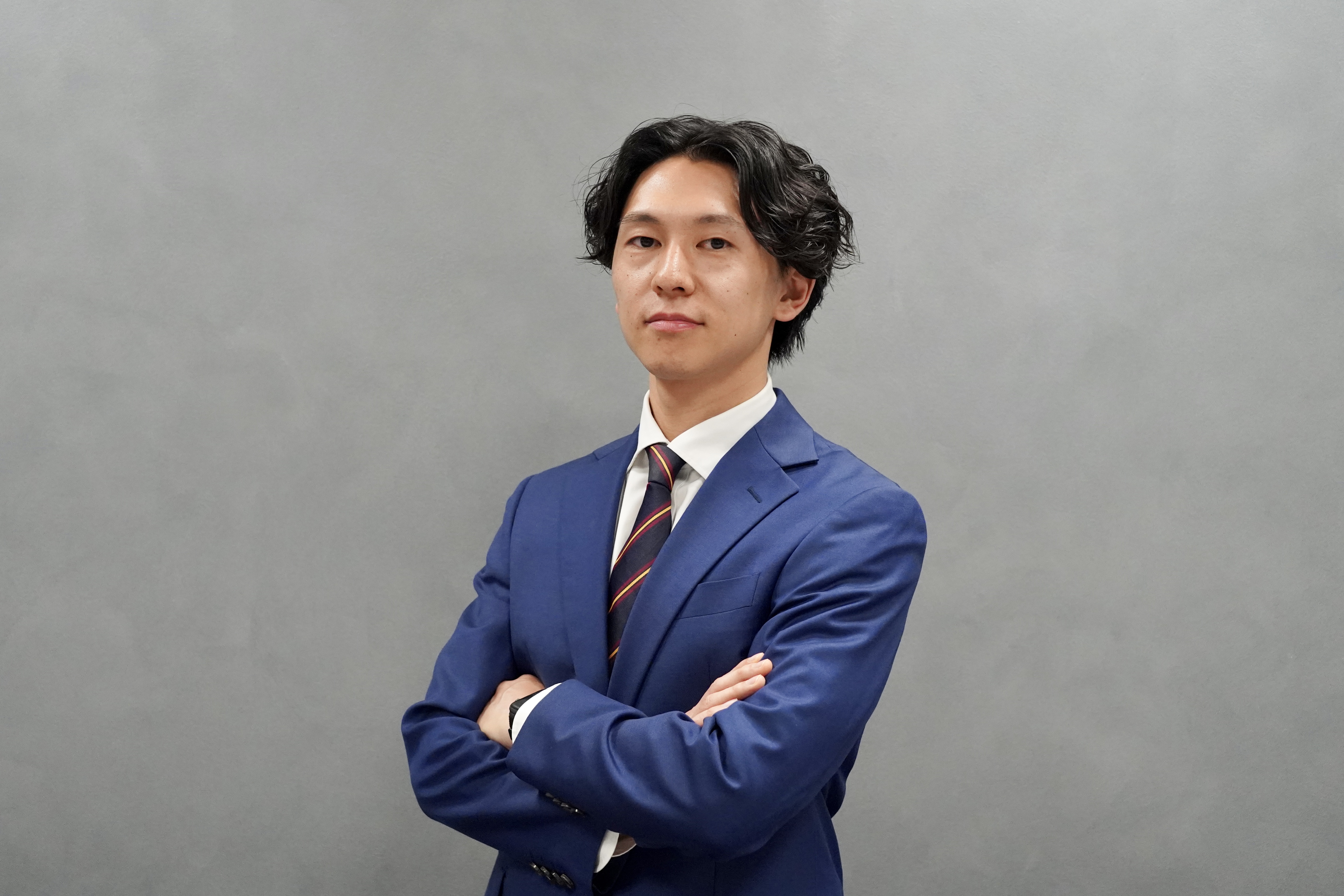

Hello, I'm Noriaki Asato, Representative Attorney at LegalAgent.
A production company makes several dozen episodes of a short drama, each about 90 seconds long. The first few episodes are free to watch, and viewers buy the rest through in-app purchases. Scenes that draw a strong response are clipped and run as social media ads, and the series is dubbed into foreign languages and distributed overseas. When a vertical short drama is cut down into shorter pieces for advertising and rolled out in multiple languages, each of those uses requires its own check of the licenses involved.
The question "who owns the copyright in the finished video?" is only the entry point to the rights that need to be checked. For the original work, the screenplay, the music used in the drama and the footage, you need to confirm how far the production company and the distributor are entitled to use them. For the performers' performances and likenesses, you need to confirm that editing into vertical format, cutting into short clips and use in advertising have been authorized. If the plan extends to translation, dubbing or overseas distribution, the licenses must cover those uses as well. If a necessary license is missing, materials have to be replaced or the scope of use has to be changed, and in some cases the entire series may have to be pulled from distribution.
"Ubaiai, Fuyu 2025," co-produced by TV Asahi and SHORTTV LIMITED of Hong Kong, began streaming on March 31, 2025 as a vertical short drama of 85 episodes, each roughly 90 to 120 seconds long. According to TV Asahi's announcement (Japanese), it is a remake of a 2017 television drama with a new cast, delivered through a streaming app available in more than 198 countries and regions worldwide.
This case condenses the rights clearance issues specific to vertical short dramas. It combines a remake based on a past television drama, a cross-border co-production, performances by new cast members, distribution on an overseas platform and restructuring into a large number of short episodes. Even for original works, the number of players involved naturally grows when the story is based on a web novel, a manga or a social media post, or when a company funds production to use the drama as a tie-in advertisement.
If you assume that "each episode is a short video, so the contracts can be simple," you may face major trouble later. It is important to anticipate, before shooting begins, how you will want to use the work after completion: not only distribution of the main episodes, but also clips of memorable scenes, still images, social media ads, television broadcasts, translation and dubbing into foreign languages, and production of sequels.
Authors of a Cinematographic Work and the Film Producer
Article 16 of the Copyright Act (Japanese) provides that the authors of a cinematographic work are those who have contributed creatively to the overall formation of the work by taking charge of its production, direction, staging, cinematography, art direction and the like. The creators of the original work, the screenplay, the music used in the film and similar works each hold their own copyrights, separate from the authors of the film itself. Where a work made for hire under Article 15 of the same Act is established, the company or other employer becomes the author in accordance with that provision.
In contrast, Article 29(1) of the Act provides that, except for the special rule on works made for hire and exceptions such as films made for broadcasting, the copyright in a cinematographic work belongs to the film producer if the authors have undertaken to the film producer to participate in the making of the film. A film producer here means the person who takes "the initiative and responsibility" for making the film (Article 2(1)(x)). Where the company that funded production, the company that handled the practical production work and the company that operates the distribution platform are different, who truly holds the initiative and responsibility is determined from the actual circumstances, not from the title of the contract.
The ownership of copyright in the finished video under Article 29 is a separate matter from the rights clearance for the original novel, the screenplay and the songs used in the drama. The right to use existing footage, photographs or logos must also be checked individually. Adapting an original work into a drama or translating it into a foreign language involves the right of adaptation and the right of translation under Article 27 of the Copyright Act, and distributing the resulting derivative work also involves the rights held by the author of the original work under Article 28.
When entering into an agreement to assign copyright, if the rights under Articles 27 and 28 are not specifically mentioned, those rights are presumed to have been reserved by the assignor (Article 61(2) of the Act). Just because a contract says "all copyrights are assigned," it would be premature to assume that you have automatically acquired the rights for overseas remakes or multilingual expansion. You need to make clear whether the arrangement is an assignment or a license, and then specify the works covered, the methods of use, the territory and term, the languages, whether sublicensing is permitted and the amount of consideration.
Performers' Performances and Personal Interests
Even if performers are not authors of the script or the video, they hold neighboring rights as performers. Article 91 of the Copyright Act provides for the right of sound and visual recording, Article 92 for rights relating to broadcasting and wire broadcasting, and Article 92-2 for the right of making transmittable.
For performances recorded in a cinematographic work, there is a rule that once a performer has consented to sound or visual recording, the performer's right to authorize no longer extends to subsequent screening or distribution as a film (Article 91(2), Article 92(2) and Article 92-2(2)). In practice, this principle is called the "one-chance principle." The Agency for Cultural Affairs' Copyright Text for Fiscal 2025 (Japanese) also explains that, while secondary use as a film generally does not require fresh consent, cases such as a soundtrack CD, where the audio is extracted from the film to make a separate sound recording, are an exception.
This rule does not mean that performer agreements can be handled loosely. The proper approach is first to confirm whether the video being produced is a cinematographic work in the first place, whether the performer has consented to the recording, and whether the planned uses fall within the scope of use as a film. Appearance fees and success fees, restrictions on appearing in competing works, the shooting schedule, the acceptable range of dangerous stunts and exposure, and the use of the performer's voice and appearance through generative AI are matters to be set out in detail in the performer agreement, separately from neighboring rights.
Performers also have moral rights of performers, such as the right of attribution and the right to integrity. Moral rights of performers cannot be transferred to another person. A performer's right to integrity covers modifications that harm the performer's honor or reputation, and there are exemptions for unavoidable modifications and modifications that do not violate fair practice. Because the requirements differ from those of an author's right to integrity, the question is assessed under the provisions on performers' moral rights. That said, extremely cropping part of a performer's body to fit a vertical screen, splicing lines into a different context, or editing so that it appears the performer endorses a product they do not support can escalate into a dispute over personal interests. The performer agreement should explain in advance the expected scope of editing and advertising use and include an approval procedure that prevents unjust modifications against the performer's will.
The performer agreement should also state the extent to which stage names, real names, photographs and career histories may be used for advertising and promotion. An announcement of the main episodes and a promotional ad that makes it look as though the performer recommends a particular product differ greatly in legal character. The countries and periods in which social media ads will run, the handling of clipped still images, and tie-in use with sponsor companies should be organized in separate clauses.
Rights in the Original Work, Music and Production Staff
When adapting a web novel or manga into video, check in detail the scope licensed under the original work license agreement. Agree on whether the license is limited to a Japanese-language vertical drama, or whether it includes translation and dubbing into multiple languages, sequels and spin-offs, re-editing into horizontal format, television broadcasting and merchandise sales. When remaking an old television program into vertical format, identify not only the rights in the original concept but also the rights in the original screenplay, character settings, music used in the drama and past footage.
In the contract with the screenwriter, decide the delivery schedule for each episode, the number of revisions and the supervision procedure. In addition to how credits will appear, also set the extent to which use in sequels and translations and publication of the scenario in book form are permitted. The mere fact that a screenwriting fee has been paid does not transfer the copyright in the screenplay to the production company. Even where the copyright is assigned, the rights under Articles 27 and 28 of the Copyright Act should be specifically stated, and for moral rights of authors, a covenant not to exercise them should be included along with its scope and limits.
For music, the procedure differs depending on whether you use existing commercial songs, original songs written for the work, or audio from a BGM library. Even if you have obtained a license to play a song in the main episodes on the streaming app, a separate license may be required for promotional videos on social media or television commercials. Whether the music can be used for overseas distribution or soundtrack sales must also be checked license by license. Confirm the territories and distribution media in which the copyright in the lyrics and composition, the record producer's rights in the master recording and the performers' rights may be used.
Production staff such as the director, camera operators, editors and art staff can also be authors under Article 16 of the Copyright Act if they contribute to the creation of the film as a whole. Even where ownership under Article 29 is assumed, the contract should clearly address the agreement to participate in production, the handling of guarantees and credits, the obligation to deliver production materials, the extent to which the work may be shown as a portfolio piece, and confidentiality obligations. Also check whether the rights in CG, props and graphics created by subcontractors and freelancers are ultimately properly consolidated in the production company.
When the party to which production is entrusted is an individual with no employees, or a corporation with no officers other than its representative and no employees, the Freelance Act (Japanese) applies. When placing an order, the ordering party must immediately specify, in writing or by electromagnetic means, the details of the work, the delivery date and place, the date on which inspection will be completed, the amount of remuneration or the method of calculation, and the payment date. If assignment or licensing of copyright is requested, its scope and consideration must also be specified in line with the order. Depending on conditions such as whether the ordering party employs staff and whether the engagement continues for a certain period or longer, obligations apply such as paying remuneration by the due date, taking measures against harassment and giving advance notice of mid-term termination.
In production outsourcing, attention must also be paid to the Act on Ensuring Proper Transactions Involving Specified Entrusted Business Operators (Torihiki Tekiseika Act) that took effect in January 2026. It applies even to transactions between corporations, and in some cases it applies concurrently with the Freelance Act. Video editing, scriptwriting and the creation of CG or sound data may, depending on what is actually ordered, fall under consignment for the creation of information-based products. Whether the Act applies is determined not only from the form of the contract but also from the parties' capital and number of employees and the content of the work entrusted. Where it applies, the ordering party must specify the order terms, set a payment date that is as short as possible and within 60 days of receipt, and keep records of the order. Reducing remuneration without any fault on the part of the contractor is prohibited. Having the contractor change the content or redo work without any fault on its part and thereby unjustly harming its interests is also prohibited, so the terms and consideration for additional work should be managed throughout the production process. The specific approach for film production is also set out in the Q&A on the Act (Japanese) published by the Japan Fair Trade Commission.
Multilingual Distribution, Repurposing for Advertising and Generative AI
When rolling a work out to overseas markets, it is not just a matter of the right to stream the finished video as is in another region. The rollout involves subtitles and dubbing for local audiences, changes to the title, cuts to comply with each country's regulations and the creation of advertising materials. If the original work agreement is limited to domestic use, the performer agreements assume only a Japanese version, or certain countries are excluded from the scope of music use, you end up having to re-obtain licenses just before the local launch.
In the contract with the distribution platform, set whether the arrangement is exclusive, the countries and languages covered and the term of use. Also check the basis for calculating revenue sharing and charges, and the disclosure of viewing data needed to verify it. Decide who is responsible for anti-piracy measures and the deletion of data after the contract ends, and the procedures for both. If the service is designed so that viewers unlock a large number of episodes with in-app coins, clearly display the price per episode, bundle prices, the auto-renewal mechanism, the expiration date of remaining coins and the refund policy. When issuing paid coins for the Japanese market, also check whether they constitute prepaid payment instruments under the Payment Services Act.
Cases in which generative AI is used for foreign-language translation, dubbing and lip-sync are also increasing. This not only improves production efficiency but also bears directly on legal rights. When a performer's voice is used to train AI and produce lines in languages the performer never spoke, the performer agreement should set out in detail the scope of voice data used for training, the content and languages of lines that may be generated, the works and advertisements in which they may be used, and how the trained model will be disposed of after the contract ends. This is because it is hard to imagine that a past consent to sound and visual recording, or the one-chance principle, would automatically grant the right to reuse a voice model in other works.
If AI-based automatic translation changes the nuance of lines or the personality of characters, it may infringe the screenwriter's moral rights or the performers' personal interests. Designate in advance a person responsible for reviewing local versions, check that nothing conflicts with religious sensitivities, discriminatory expressions, local age ratings or advertising regulations, and put in place an operational system that allows prompt correction even after distribution if a problem is found.
The Chain of Rights to Lock Down Before Production Begins
When considering copyright law for a vertical short drama, what you check is not how many contracts you have signed, but whether the chain of licenses is connected for each planned use. For the original work or the earlier production, confirm the licenses for remakes and overseas expansion; for the screenplay and direction, confirm the conditions for splitting into episodes and translation. For performers, compare use in the main episodes and in clipped ads, and AI dubbing, against the licensed scope. Music used in the drama and art sets may have different licensed scopes for distribution of the main episodes and for social media ads, and with the distributor you need to sort out domestic and overseas distribution rights, the charging model, viewing data and the authority to sublicense.
At the planning stage, list not only the developments already decided but also the secondary uses you would want to pursue if the work becomes a hit. For items such as vertical distribution of the main episodes, re-editing into horizontal format, social media clips and web ads, television broadcasting and overseas subtitles, and AI dubbing and merchandising, record the rights holder's name, contract date, term and territory of use, consideration and whether sublicensing is permitted in a single ledger.
For any item whose rights have not been secured before shooting starts, adopt a practice of halting the shooting or release process until the necessary consent is obtained. This is a practical risk management measure on the production side; it does not mean that obtaining every right is a legal condition precedent. If you approach performers with additional negotiations such as "we also want to use this in overseas ads" or "please also allow AI dubbing" after shooting is over and distribution is imminent, it is hard for them to refuse, and this becomes a cause of later disputes. For secondary uses that have not yet been decided, a realistic approach is to set the scope and additional consideration in advance as an option clause at the time of contracting, and to give written notice when exercising the right.
When the work is delivered, store not only the finished video data but also supporting documents such as the final screenplay, proof of music rights, performer consent forms and contracts with subcontractors, linked to the rights ledger. In a co-production, agree on which company will keep the originals of the underlying contracts and submit them when the distribution platform asks for proof of rights.
After distribution begins, there are cases in which promotion staff repurpose materials for advertising without checking the original contracts. If you make visible in a management system which materials can be used and to what extent, so that restrictions such as the term of use, territory, a ban on repurposing for advertising or a ban on AI use can be checked file by file, the contractual rules will reach the people on the ground.
A Bundle of Contracts Worked Back from the Usage Plan
In producing a vertical short drama, simply putting individual production agreements, performer agreements, original work license agreements, music licenses and distribution agreements in order as a formality tends to leave the chain of rights broken at the stage of overseas expansion or repurposing for advertising. At LegalAgent, we organize the chain of rights by working back from the planned secondary uses and distribution formats, and support everything from contract design before production to operations after distribution. For related services, please see IP and Entertainment Legal Services, Intellectual Property Legal Services, Cross-Border and English-Language Contracts and Legal Outsourcing.
Services connected to this topic